Every harvest season, agricultural facilities lose significant capital to dockage fees, spoiled storage, and inefficient milling. Inadequate raw material preparation directly drains your operational profits. When you purchase the wrong commercial equipment, it creates immediate bottlenecks on your receiving line. You will also experience excessive power consumption and severely degraded final product quality. Buyers often feel overwhelmed by technical specifications and exaggerated manufacturer claims. You need a reliable, transparent way to navigate the complex industrial equipment market. This guide provides an objective, facility-focused framework to evaluate your options thoroughly. We will help you confidently shortlist and procure the exact processing machinery tailored to your specific operational scope. You will learn how to match equipment to your crop type, assess facility requirements, and verify technical specifications before making a final procurement decision.
Key Takeaways
Selection must be driven by your exact process stage (pre-cleaning vs. fine grading) and target purity percentages.
Air-screen cleaners serve as the versatile foundation, but gravity and optical separators are required for strict commercial grading.
Crop specificities (e.g., cereals vs. legumes) dictate screen configurations and machine airflow dynamics.
True equipment ROI is measured by continuous throughput capacity, ease of screen swaps, and dust-control compliance.
Assessing Your Commercial Grain Processing Machine Requirements
You must establish a clear baseline of your operational needs before looking at equipment catalogs. Proper assessment prevents you from buying an undersized machine. It also keeps you from overspending on unnecessary precision.
Define the Process Stage
First, clarify the exact role the machine will play in your facility. Do you require a high-volume pre-cleaner at the intake receiving area? Pre-cleaners remove large debris like stalks, stones, and heavy dust quickly. They protect downstream equipment from catastrophic damage. Alternatively, you might need a precision fine cleaner for a milling or seed processing operation. Fine cleaners operate at slower speeds but deliver exceptional purity. You cannot use a single machine to perform both high-speed intake and slow precision grading simultaneously.
Capacity vs. Precision Trade-off
You must understand the inverse relationship between ton-per-hour (TPH) throughput and impurity removal percentages. Faster processing speeds typically result in lower final purity levels. If you push 100 tons per hour through a standard grain processing machine, you will only remove the most obvious debris. If you slow the feed rate down to 20 tons per hour on the exact same machine, you achieve a much higher purity standard. Always match your required purity percentage to realistic operational speeds.
Facility Layout Constraints
Physical facility limits dictate your equipment options heavily. You must conduct a thorough site audit. Consider these critical layout dimensions:
Vertical Clearance: Measure the distance from the floor to the ceiling structure. Many commercial separators require significant vertical height for gravity-fed intake hoppers.
Structural Load-Bearing Limits: Heavy industrial machines generate intense vibrations. Verify your floor or mezzanine can support the dynamic operational load.
Integration Points: Map out existing elevator legs and conveyor belts. Your new equipment must integrate seamlessly into this existing material flow.
Best Practice: Always consult your facility engineer before selecting a machine. Ensure you have adequate access space around the equipment for routine maintenance.
Core Types of Grain Cleaning Equipment: A Categorical Comparison
Modern grain cleaning equipment relies on distinct functional categories. Each machine targets specific physical properties of the impurities. You will often need to combine different machine types to achieve commercial-grade purity.
Equipment Type | Primary Function | Best Use Case | Target Impurities |
Air-Screen Cleaner | Aspiration and Sifting | Primary bulk separation | Dust, chaff, oversized stalks |
Gravity Separator | Density/Weight sorting | Secondary fine grading | Damaged kernels, identical-sized stones |
Destoner | Heavy material removal | Milling protection | Glass, heavy stones, metal |
Optical Sorter | Color and shape detection | Final food-grade sorting | Discolored seeds, diseased grains |
Air-Screen Cleaners (Aspiration & Sifting)
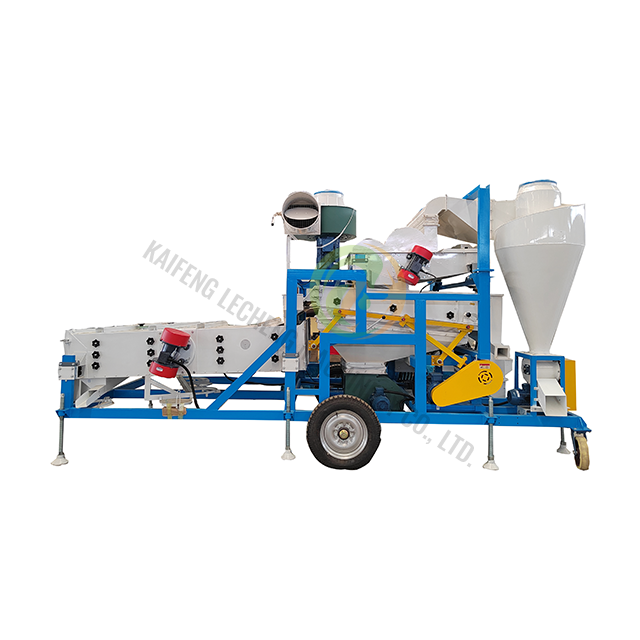
The air-screen cleaner remains the industry standard foundation for any facility. It removes light impurities using strong aspiration fans. It then sizes the remaining material using a series of perforated screens. You use this machine for primary separation and grading of bulk commodities. It handles high capacities efficiently.
Gravity Grain Separators
Sometimes, impurities are the exact same size as the good crop. An air-screen cleaner cannot separate them. A highly calibrated grain separator solves this problem. It separates materials by specific weight and density. The machine uses an oscillating, pressurized deck to float lighter materials above heavier ones. It is best for removing weather-damaged kernels, mud balls, or insect-bitten grains.
Destoners and Magnetic Separators
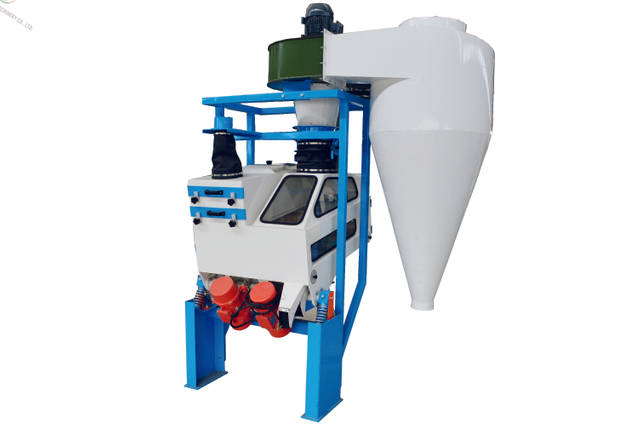
Destoners provide targeted removal of heavy foreign materials. They isolate stones, glass fragments, and tramp metal effectively. You place destoners and magnetic separators early in your processing line. They act as a critical shield. They protect downstream milling equipment from catastrophic damage caused by solid objects.
Optical/Color Sorters
Optical sorters represent the pinnacle of modern separation technology. They use advanced high-speed cameras to inspect every individual kernel. The machine uses targeted bursts of compressed air to eject discolored or diseased grains. You deploy optical sorters for final-stage, high-margin food grade processing.
Matching the Grain Cleaner Machine to Specific Crop Types
You cannot treat all crops identically. The physical characteristics of your specific crop dictate your machine configuration. Screen setups, oscillation speeds, and aspiration levels must match the agricultural product.
Standard Cereals (Wheat, Barley, Corn)
Standard cereals require robust machinery. You must focus on handling high volumes consistently. Standard cereals bring heavy debris directly from the field. Therefore, your grain cleaner machine needs robust scalping capabilities. You also need heavy-duty aspiration fans. Wheat and corn generate enormous dust loads during intake. Proper fan capacity keeps your facility clean and safe.
Legumes and Soybeans
Legumes pose a completely different processing challenge. You must address the physical fragility of beans. Soybeans split easily under rough mechanical stress. Damaged seed coats lower your commercial grading value immediately. You require equipment featuring gentle handling mechanisms. Look for machines utilizing rubber-lined spouts. Avoid systems using high-speed rigid augers. Gentle bucket elevators prevent splitting and preserve your profit margins.
Fine Seeds (Alfalfa, Sesame, Grass)
Processing fine seeds requires exceptional mechanical precision. Standard commercial equipment will lose too much good product. You must highlight the need for a specialized seed cleaner machine. These units feature micro-adjustable airflows. You need highly precise screen meshes to isolate tiny weed seeds. Furthermore, fine seeds easily plug screen holes. Therefore, your machine requires active brush-cleaning or rubber ball systems. These mechanisms constantly tap the screens to prevent blinding during continuous operation.
Common Mistake: Many operators fail to change screens when switching from corn to soybeans. Always use crop-specific screen perforations to avoid severe product loss.
Evaluation Dimensions: Vetting the Spec Sheet
Manufacturers present specifications under ideal laboratory conditions. You must evaluate these spec sheets critically. Translate these ideal numbers into realistic field performance expectations.
Realistic Throughput Ratings
Never take maximum manufacturer capacities at face value. You should always discount stated throughput ratings by 15 to 20 percent. Field crops bring real-world moisture variations. Wet crops stick to screens and slow down the flow rate. Heavy impurity loads from a poor harvest also drastically reduce processing speeds. Building this buffer ensures your facility never falls behind during peak harvest delivery windows.
Screen Accessibility and Changeover
Labor efficiency determines your daily profitability. You must evaluate how long it takes a single operator to swap screens. Changing crop types requires entirely new screen configurations. Traditional bolted frames require heavy tools and multiple operators. This process can halt production for hours. Instead, look for modern toolless entry systems. Quick-release clamps allow one person to change a screen set in minutes.
Aspiration and Dust Control
Dust control goes far beyond simple facility cleanliness. It is a critical safety and compliance issue. Assess the machine's closed-circuit aspiration system carefully. Agricultural dust is highly combustible. You must link dust control directly to facility safety. Ensure the equipment meets ATEX or OSHA compliance standards for explosive dust environments. Good aspiration also protects operator respiratory health during long shifts.
Build Quality and Wear Parts
Industrial machinery endures constant abrasive wear. Inspect the build quality meticulously. Look for AR (Abrasion Resistant) steel in high-impact zones like intake hoppers and spouts. Avoid machines using proprietary, custom-built bearings. You want equipment utilizing standard off-the-shelf bearings. This allows you to buy replacement parts at any local hardware supplier. Finally, ensure all grease points are easily accessible from the ground level to encourage regular maintenance.
Implementation Risks and Procurement Shortlisting
Procuring heavy machinery involves substantial capital and operational risk. You must actively mitigate these risks before finalizing your purchase. Careful vendor vetting ensures a smooth installation and reliable long-term performance.
Demand a Material Test
Never buy a machine based purely on a brochure. We strongly advise sending a raw sample of your specific crop to the manufacturer’s test facility. Do this before signing any purchase order. Every farm produces a unique mix of crop varieties, weed seeds, and soil types. A live material test proves the equipment can handle your actual field conditions. Request a video recording of the test. Demand a lab report showing the final purity percentage of your exact sample.
Vendor Support and Parts Availability
Even the best equipment experiences mechanical wear. You must ensure the manufacturer provides exceptional post-sale support. Investigate their parts distribution network thoroughly. Ensure the manufacturer has a domestic or highly responsive parts depot. Harvest-season downtime destroys annual profits. If a critical bearing fails in October, you cannot wait three weeks for an international shipment. A responsive vendor keeps your elevator running during the most profitable weeks of the year.
Best Practice: When negotiating your contract, request a standard wear-parts kit. Keep extra screens, belts, and rubber balls on your warehouse shelf before the season begins.
Conclusion
Selecting optimal processing equipment requires careful analysis of your facility needs and crop types. The right commercial equipment balances your immediate processing demands against future operational scalability. Do not purchase machinery based solely on today's intake volumes. Plan for your facility's growth over the next decade.
Next Step Action:
Audit your current dockage reports to identify the most common impurities penalizing your profits.
Measure your physical facility footprint, noting vertical clearances and load-bearing limits.
Contact your shortlisted vendors today to arrange a custom material separation test using your raw crop samples.
FAQ
Q: What is the difference between a grain cleaner and a grain grader?
A: A cleaner primarily focuses on impurity removal. It eliminates unwanted materials like dust, chaff, foreign stalks, and stones from the bulk crop. A grader serves a different function. It takes the already-cleaned crop and sorts it by exact physical dimensions. Graders separate the good product into specific categories based on uniform size, length, or specific weight.
Q: How often do screens on a commercial grain separator need replacing?
A: Screen wear depends entirely on your crop type and processing volume. Highly abrasive materials, like soybeans or field corn, wear down metal perforations rapidly. Softer crops like wheat cause less friction. Under heavy commercial use, you should inspect screens monthly. Most facilities replace their primary high-wear screens every one to two harvest seasons to maintain strict sizing precision.
Q: Can one seed cleaner machine handle multiple types of crops?
A: Yes. Modern processing machines offer excellent versatility. You can run completely different crops through the exact same main unit. However, you must adapt the machine for each run. You need to purchase the correct supplementary screen sets for the new seed size. You also must adjust the aspiration airflow settings and deck oscillation speeds to match the new crop's density.
Q: What capacity machine do I need for a mid-sized commercial elevator?
A: You should match your machine's capacity directly to your receiving elevator leg. As a baseline heuristic, your pre-cleaner must exceed your elevator leg's speed. If your leg moves 100 tons per hour, purchase a cleaner rated for at least 115 to 120 tons per hour. This buffer accounts for wet crops and heavy debris, preventing dangerous bottlenecks during peak receiving hours.