Facility layout goes far beyond a simple architectural task. Planners must view it as a critical operational bottleneck. A poorly planned layout creates immense daily friction. It inevitably leads to cross-contamination, sluggish material handling, and severely compromised seed viability.
Transitioning from a raw harvest to certified seed demands rigorous processes. You must execute a highly precise sequence of cleaning, sizing, and packaging. Facility planners face a tough balancing act during the initial blueprint phase. They must carefully weigh upfront capital expenditures against long-term operational adaptability. Different crop profiles mandate very specific spatial configurations.
This guide maps out evidence-based criteria for your upcoming facility project. We detail how to structure a high-yield processing environment. You will discover practical methods to evaluate core machinery effectively. Finally, we explore proven tactics to mitigate severe implementation risks before you finalize any structural plans.
Key Takeaways
- Effective plant layout relies on gravity-fed vertical integration or streamlined horizontal flow to minimize mechanical seed damage.
- Equipment selection must align strictly with specific crop tolerances (e.g., distinguishing the robust requirements of a maize processing plant from a wheat seed processing plant).
- Integrating a reliable seed cleaning line and precise seed grading equipment dictates final market value and compliance with agricultural purity standards.
- End-of-line bottlenecks can be mitigated by utilizing automated DCS packing scales for exact weight compliance and rapid dispatch.
Defining Baseline Requirements Before Layout Design
You cannot design a viable layout without defining your exact business problem first. Facility design must begin by establishing rigid production capacity targets. You must also outline your specific crop profiles. Processing parameters differ drastically depending on the chosen seed type. Ignoring these initial variables guarantees costly retrofits later.
Evaluating Seed Varieties
Consider the unique separation challenges of wheat. You must remove lightweight impurities and broken grains efficiently. Operators achieve this separation using specialized air-screen cleaners and precisely calibrated indented cylinders. A modern wheat seed processing plant must prioritize strict contaminant separation above all else. This strictness ensures agricultural purity and robust field emergence.
Maize demands an entirely different operational approach. Processing focuses heavily on effective cob removal and extremely gentle shelling mechanisms. You also need precise thickness and width sizing to ensure uniform planting. A high-performance maize processing plant requires equipment engineered to minimize physical impact. Every drop or harsh mechanical strike risks damaging the fragile germ. Damaged germs directly reduce overall lot germination rates.
Establishing Success Criteria
Operators must define explicit success metrics before selecting any equipment. We recommend anchoring your design logic to three core performance indicators. Measuring these indicators prevents ambiguous operational goals.
| Success Criteria | Industry Standard Target | Operational Impact |
| Throughput Volume | Measured in Tons Per Hour (TPH) | Dictates bucket elevator sizing and total silo holding capacity. |
| Targeted Purity | 99.8% or higher | Determines the required complexity of the air-screen and gravity separation stages. |
| Mechanical Damage Limits | Under 0.5% internal damage | Forces the adoption of gravity-fed chutes over harsh screw conveyors. |
Architectural Strategies for the Seed Processing Plant
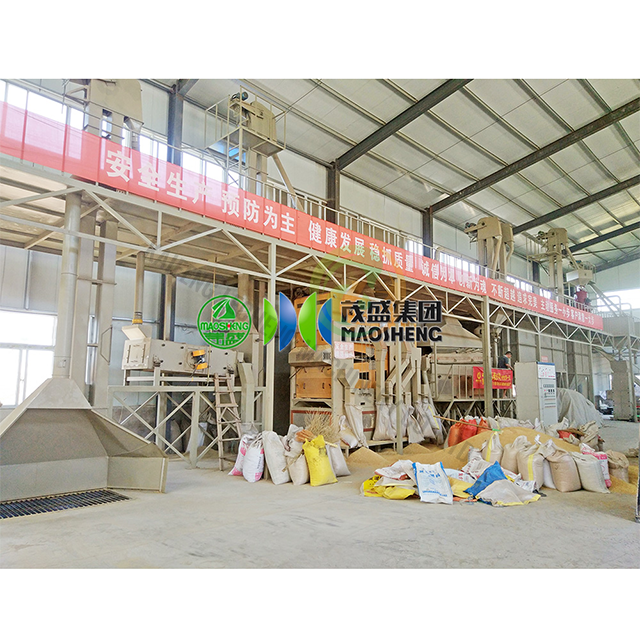
Planners typically choose between two fundamental structural approaches. Each approach dictates the daily flow of material and directly influences product safety. You must align this choice to your available land, budget, and crop sensitivity.
Solution Categories: Vertical vs. Horizontal
We can categorize plant architecture into two standard formats. Comparing these helps you determine the most efficient routing for your seed processing plant.
| Layout Type | Primary Mechanism | Key Advantages | Known Drawbacks |
| Vertical Layout (Multi-story) | Capitalizes on natural gravity flow. | Reduces bucket elevator usage. Minimizes seed damage. Lowers mechanical maintenance. | Requires significantly higher initial construction costs and robust foundation engineering. |
| Horizontal Layout (Single-story) | Relies on horizontal conveying systems. | Easier to construct rapidly. Simpler to expand or retrofit existing warehouses. | Increases cross-contamination risks. Elevates mechanical damage probabilities via Z-elevators. |
Cross-Contamination Mitigation
Maintaining high lot purity demands aggressive cross-contamination prevention. Operators frequently switch between different crop varieties. Leftover seeds from previous runs ruin the certification of subsequent batches. You must mandate cleanout access points on all enclosed machinery. Ensure designers specify smooth-walled silos to prevent seeds from hanging up in the seams. Incorporate self-cleaning belt conveyors instead of standard drag chains.
Space Allocation Logic
Do not simply cram machines into a tight grid. Factor in adequate holding bins between active processing stages. These bins act as vital operational buffers. If one machine jams, the entire line does not need to halt immediately. Maintain generous operational clearances around every machine for routine maintenance. Finally, create strictly segregated zones. Keep raw intake areas completely separated from treated, clean seed zones to prevent accidental mixing.
Evaluating Core Infrastructure: Cleaning and Grading
You must evaluate equipment based on features mapping directly to required outcomes. Break down the sequential processing stages carefully. Scrutinize equipment vendors based on their engineering tolerances and material handling philosophy.
The Seed Cleaning Line
Cleaning represents your first line of defense against field debris. A poorly optimized cleaning sequence chokes downstream equipment rapidly.
- Pre-cleaning: This stage removes large trash, stalks, and heavy dust. Pre-cleaning protects sensitive downstream screens from tearing. Evaluate vendors based on their aspiration efficiency. Ask about screen changeover speeds. Fast changeovers keep production running smoothly during variety swaps.
- Fine Cleaning: Air-screen machines remain the global industry standard. Assess the total screening area size carefully. Larger areas process material slower and more thoroughly. Look for variable air controls. These controls allow operators to dial in exact aerodynamic separation for precision sorting.
Integrating a highly adaptable seed cleaning line directly dictates your final market value. It ensures total compliance with strict agricultural purity standards.
The Seed Grading Equipment
Grading dictates uniformity. Uniform seeds plant better, germinate evenly, and command premium market rates. You need specialized tools to segment the clean crop effectively.
- Gravity Separators: These machines are absolutely critical. They remove low-viability seeds, insect-damaged kernels, or immature grains based on specific weight. The deck fluidizes the crop bed using precise airflow. Heavy, viable seeds climb the deck. Lighter, weak seeds drift downward.
- Length/Width Graders (Indented Cylinders): Uniform dimensions ensure consistent crop emergence in the field. Evaluate these cylinders based on overall vibration stability. Check screen durability and the ease of manual calibration.
Selecting reliable seed grading equipment requires field-tested expertise. Insist on equipment utilizing variable speed drives for maximum sorting flexibility.
End-of-Line Efficiency: Weighing, Treatment, and Packing
Many plants process crops brilliantly but fail at the very end. The packaging phase routinely dictates the maximum true throughput of your entire facility. If your packing line stutters, the upstream machines must inevitably stop.
Chemical Treatment (Coating/Dressing)
Applying protective chemical coatings demands exact precision. Modern seed treaters integrate continuous flow systems. Emphasize the absolute need for accurate dosing mechanisms. Peristaltic pumps provide this necessary accuracy. Correct dosing prevents expensive chemical waste. More importantly, it ensures operator safety and guarantees seed safety in the soil.
Packaging Automation
Manual bagging ruins plant efficiency. Automation eliminates human fatigue and standardizes your dispatch speed. High-capacity facilities treat packaging as a highly synchronized robotics exercise.
DCS Packing Scale Integration
Legal weight compliance protects your brand reputation. Under-filling triggers legal disputes. Over-filling gives away expensive product for free.
Explain the crucial role of the DCS packing scale in your final layout. It ensures rigid weight compliance while maintaining maximum operational speed. Evaluate these scales based on three distinct mechanical factors:
- Load Cell Accuracy: Demand highly sensitive strain gauges resisting factory vibrations.
- Pneumatic Control Reliability: Gate valves must actuate instantly to cut off product flow without trapping seeds.
- System Integration: The scale must integrate seamlessly with automated bag-sewing machines or heat-sealing lines.
Implementation Risks and Digital Modernization
Theoretical layouts frequently fail during real-world execution. Planners often overlook invisible facility constraints until installation day. You must address these hazards during the blueprint phase.
Implementation Realities
Highlight common rollout failures plaguing new facilities. Many designers critically underestimate dust extraction requirements. Inadequate dust control poses severe explosion risks. It also creates unacceptable respiratory health hazards for floor workers. Follow ATEX or local equivalent standards for explosive dust environments.
Another major failure involves misaligned equipment capacities. A common mistake pairs a 10 TPH cleaner directly to a 5 TPH grader. This mismatch creates an immediate, unsolvable bottleneck. The cleaner must throttle down to 50% capacity, destroying your projected ROI.
Digitalization & Software
Modern layouts require extensive digital frameworks. The industry has shifted heavily toward centralized PLC (Programmable Logic Controller) systems. SCADA systems provide visual, real-time monitoring of all machine performance metrics. Advanced seed processing software ensures granular traceability of seed lots from intake to bagging. These systems generate automated reports for swift regulatory compliance.
Shortlisting Logic
Advise your procurement team to select vendors offering full-line integration. Choose turnkey solutions over piecing together mismatched, isolated equipment. A single vendor ensures seamless software handshakes between machines. This approach guarantees single-point accountability for overall plant flow. If the line jams, you only have one technical support number to dial.
Conclusion
A highly profitable processing plant is never just a random collection of machines under one roof. It is a meticulously sequenced material flow designed to protect product viability. Strategic layout planning prevents bottlenecks, reduces mechanical damage, and eliminates cross-contamination risks.
Take immediate action on your project by initiating a comprehensive site audit. Establish clear throughput and purity KPIs based on your specific crop requirements. Finally, demand detailed process flow diagrams (PFDs) from prospective equipment manufacturers before you commit to any structural blueprints.
FAQ
Q: What is the minimum footprint required for a standard seed processing plant?
A: The required space depends heavily on your choice between a horizontal or vertical layout and your target throughput. Multi-story vertical layouts save ground space but require height. You must universally factor in minimum operational clearances for daily maintenance. Always allocate extra square footage to strictly segregate raw intake materials from the final clean product.
Q: How easily can a seed cleaning line switch between different crops?
A: Modern processing lines are engineered to be highly adaptable. However, actual switchover times depend directly on screen accessibility. Machines featuring quick-release screen mechanisms speed up this process. The self-cleaning capabilities of your elevators and conveying equipment also dictate how fast you can safely introduce a new crop variety.
Q: Why is a DCS packing scale preferred over manual bagging?
A: Automation delivers an immediate return on investment. A precision scale actively eliminates costly product giveaway caused by manual overfilling. It drastically reduces your reliance on manual labor. Furthermore, automated scales maintain perfect synchronization with the plant's continuous output flow, preventing end-of-line bottlenecks.


