Profit leaks often plague agricultural packaging lines. You might notice product giveaway from inaccurate weighing daily. Labor bottlenecks at manual bagging stations slow down your entire operation. These hidden losses erode margins quickly and create frustrating operational ceilings. Facility managers need a reliable, industrial-grade way to stop this waste immediately.
A DCS auto packing scale serves as the industry-standard solution for modern agricultural processing. It delivers high-speed, high-accuracy bagging tailored for modern facilities. These machines combine precision sensors, multi-stage pneumatic controls, and rugged steel construction. They stabilize your material flow and protect your daily output goals.
This comprehensive guide helps you evaluate and integrate the right system. We will explore specific grain and seed handling requirements deeply. You will learn how to specify components for your unique facility layout and material types. Your procurement team can use these practical insights to make a confident, evidence-based equipment choice.
Key Takeaways
- Upgrading to a DCS-series quantitative weighing scale typically stabilizes bagging accuracy to within ±0.2%, directly reducing product giveaway.
- Seed and grain applications require different feeding mechanisms (gravity vs. belt/vibratory) to prevent product damage and manage dust.
- Seamless integration with downstream equipment (like an automatic bagging machine or sewing conveyor) is critical for actual throughput gains.
The Business Case for Upgrading to a DCS Auto Packing Scale
Framing the Problem
Semi-manual bagging carries extensive hidden costs. Operators frequently overfill bags simply to avoid under-weight customer complaints. This defensive habit causes inconsistent bag weights and massive amounts of wasted material over a single shift. Your raw materials are valuable commodities. Giving them away cuts directly into profitability. High labor turnover presents another massive operational challenge. Manual bagging requires intense, repetitive physical effort in dusty environments. Workers fatigue easily, leading to inevitable errors and rigid throughput ceilings. You cannot scale production effectively if your bagging station relies purely on human endurance.
The Solution Mechanics
Modern systems solve these exact issues through intelligent engineering and precise automation. The core technology relies on high-resolution load cells. These sensors detect weight changes in milliseconds, communicating constantly with the control board. Multi-stage feeding processes ensure exact measurements without sacrificing operational speed. The machine uses a fast-fill mode to drop 90% of the material quickly into the bag or hopper. It then immediately switches to a slow-fill mode. This careful, restricted dribble brings the bag to its exact target weight. Speed balances perfectly against pinpoint accuracy. You get the best of both worlds.
ROI Indicators
You need clear, objective metrics to measure implementation success. Track your bags-per-minute (BPM) increases before and after installation. Processing facilities often see a 30% to 50% jump in sustained BPM. Look at labor reallocation opportunities next. You can move skilled workers from repetitive bagging tasks to higher-value quality control roles. Finally, measure the sheer reduction in raw material giveaway over a 12-month period. Consistent ±0.2% accuracy saves tons of grain annually. This massive reduction in material waste justifies the upgrade quickly.
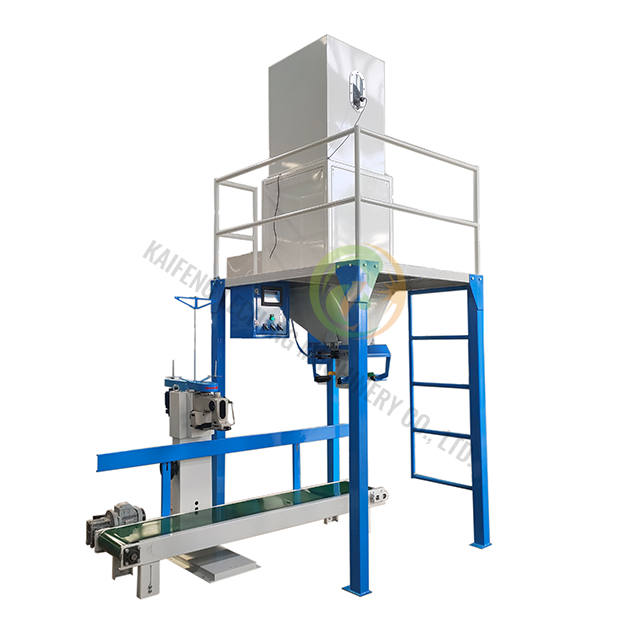
Evaluation Criteria: Selecting the Right Grain and Seed Packing Machine
Material Characteristics & Feeder Types
Different agricultural materials demand specific, tailored handling methods. A standard grain packing scale usually employs a gravity feed system. This setup works beautifully for hard, free-flowing materials like rice, corn, or wheat. Gravity does the heavy lifting, saving energy and minimizing moving parts.
However, delicate products need significantly gentler handling. A vibratory or belt feed system protects fragile items from impact forces. A dedicated seed packing machine often relies on carefully tuned vibratory trays. This specific configuration prevents mechanical damage during the dosing process. Crushed seeds lose their germination value entirely.
Weighing Range and Hopper Configuration
You must choose between gross-weigh and net-weigh configurations based on facility needs. Gross-weigh systems measure the product directly inside the bag as it hangs on the spout. This method suits lower throughput requirements perfectly. It also takes up significantly less vertical space in tight areas.
Conversely, net-weigh systems utilize a dedicated pre-weigh hopper above the bagging spout. The machine measures the exact batch while the operator readies the next empty bag. This overlapping, simultaneous process drastically increases overall bagging speed. High-volume processing facilities almost always choose net-weigh setups for maximum efficiency.
Dust Control & Compliance
Grain handling generates highly combustible dust particles. Uncontrolled dust poses severe explosion risks in confined industrial spaces. Facilities must adhere to ATEX or NFPA standards for combustible dust. Enclosed dosing systems are absolutely mandatory for modern safety compliance. Look for equipment featuring integrated dust extraction ports. These essential ports connect directly to your facility's central filtration systems. Keeping the ambient air clean ensures strict regulatory compliance and protects your staff simultaneously.
| System Feature | Gross-Weigh Configuration | Net-Weigh Configuration |
| Weighing Location | Inside the actual bag | Inside an internal pre-weigh hopper |
| Throughput Speed | Moderate (4-6 bags per minute) | High (8-14 bags per minute) |
| Vertical Space Needed | Low clearance required | High clearance required |
| Best Application | Tight spaces, lower volume operations | High-speed continuous lines |
Implementation Realities for Industrial Weighing Packaging Machines
Line Integration
A weighing scale never operates in a vacuum. It must sync flawlessly with your broader production setup. An industrial weighing packaging machine connects closely to holding bins upstream. Downstream, it feeds directly into an automatic bagging machine or heat-sealing conveyor. Any physical misalignment creates severe daily bottlenecks. Electronic sensors must communicate seamlessly across the entire line. If the downstream sewing conveyor jams unexpectedly, the scale must pause automatically to prevent massive material spills.
Pneumatic vs. Electronic Components
Internal control systems drive your daily reliability. Evaluate the pneumatic cylinders and electronic relays carefully before purchasing. Universal PLCs (Programmable Logic Controllers) make long-term troubleshooting much easier for maintenance teams. Avoid highly proprietary electronics whenever possible. Sourcing replacement parts becomes a frustrating nightmare when components are heavily customized. Standardized pneumatic valves ensure you can buy replacements from local industrial suppliers. This smart strategy keeps production downtime to an absolute minimum.
Space and Footprint Constraints
Do not ignore crucial vertical clearance requirements. A standard unit needs specific headroom beneath your existing silos or bucket elevators. Measure your facility dimensions meticulously before ordering. Net-weigh scales require substantially taller installations due to the extra pre-weigh hopper. You might need to modify your elevator discharge chutes entirely. Plan these necessary structural adjustments early to avoid costly, frustrating installation delays.
Commissioning, Calibration, and Adoption Risks
The Calibration Protocol
Using static weights only tells half the mechanical story. Initial facility setup requires extensive dynamic testing. You must calibrate the machine using the actual grain or seed you intend to package. Material density variations drastically affect the slow-fill dribble rate. A quantitative weighing scale behaves very differently with dense winter wheat compared to lightweight oats. Test multiple continuous batches. Adjust the pneumatic gate timing based strictly on real-world material flow dynamics.
Follow these essential steps for dynamic calibration:
- Zero the scale completely while the hopper remains empty.
- Run a 10-bag static weight test using certified calibration blocks.
- Perform a 20-bag dynamic flow test using the actual agricultural product.
- Adjust the fast-fill and slow-fill gate transition timings based on weight variance.
- Save and lock the finalized recipe settings into the primary control panel.
Operator Adoption
Your team must feel entirely comfortable using the new automation. Intuitive HMI (Human-Machine Interface) touchscreens drive rapid daily adoption. Complex, nested menus frustrate busy workers instantly. Operators need to switch product recipes easily and securely. Changing from a 25kg wheat setting to a 50kg soybean setting should take mere seconds. They should not have to call a maintenance engineer for basic daily recipe changes. Clear, visual icons on the display effectively help overcome common language barriers on the floor.
Maintenance Realities
Consistent accuracy requires dedicated, consistent upkeep. Set highly realistic expectations for daily machine cleaning. Dust accumulation on load cell sensors subtly skews weight measurements over time. Operators should perform a quick, careful sensor dusting at the end of every single shift. Schedule quarterly professional load cell recalibrations. These strict routines maintain the critical ±0.2% accuracy standard long-term. Neglecting this maintenance leads to creeping weight errors and returning profit leaks.
Shortlisting Logic: How to Vet a DCS Scale Manufacturer
Evidence-Based Vetting
Do not trust glossy marketing brochures alone. Demand unedited, continuous video demonstrations from the manufacturer. You need to see the exact machine running your specific target material. Watching dense grains flow smoothly gives you operational confidence. Seeing delicate grass seeds handled gently proves the machine's specialized capability. Ask the vendor to simulate a downstream conveyor jam during the video. Watch closely how the scale's software responds to the sudden interruption.
Documentation
Proper operating manuals save hours of late-night frustration. Ensure the vendor provides comprehensive English documentation upon delivery. It must cover detailed troubleshooting steps and specific error codes. Complete electrical schematics are absolutely non-negotiable. Your local facility electricians need these diagrams to trace elusive faults safely. Poorly translated or incomplete manuals often lead to dangerous, irreversible wiring mistakes.
Demand these critical documents before signing off:
- Complete mechanical assembly and installation drawings.
- A detailed list of all proprietary error codes and their solutions.
- High-resolution electrical schematics for the main control cabinet.
- A recommended spare parts list covering two years of continuous operation.
Warranty & Support
Look well beyond the standard one-year warranty length. Assess the manufacturer's guaranteed service response time. How quickly will their engineers troubleshoot a complex PLC software bug remotely? How fast can they physically ship a replacement load cell to your rural facility? Unplanned downtime costs significant money every single minute. A highly responsive support team proves far more valuable than a slightly cheaper upfront purchase price. Focus heavily on definitive Service Level Agreements rather than generic verbal promises.
Conclusion
A reliable DCS unit represents a truly foundational upgrade for your facility. It forcefully shifts operations away from heavy manual labor dependency. You gain a scalable, incredibly accurate production environment. This mechanical transformation permanently protects your tight margins from excessive product giveaway.
Always prioritize material-specific feeding mechanisms during your selection process. Reliable downstream line integration matters much more than raw, isolated machine speed. An extremely fast bagging scale remains useless if your sewing line cannot maintain the pace. Focus on holistic system harmony.
Request a comprehensive material flow test from your shortlisted vendors today. Consult an experienced systems engineer to design a customized, efficient line layout. Take the definitive next step toward a highly optimized, automated bagging operation.
FAQ
Q: What is the standard accuracy of a DCS auto packing scale?
A: A standard unit achieves a precise ±0.2% variance per bag. The system hits this mark using specialized two-stage feeding. A fast-fill gate drops the bulk of the product rapidly. A slow-fill gate then dribbles the remaining amount to reach the exact target weight.
Q: Can one machine handle both fragile seeds and standard grains?
A: Yes, but it requires the correct mechanical configuration. You must specify adjustable feed gates or specialized vibratory feeders. Gravity feeds work perfectly for hard grains. However, vibratory trays prevent seed crushing during the delicate dosing process.
Q: How often does a quantitative weighing scale need calibration?
A: We highly recommend daily zeroing before the morning shift begins. Operators should perform a known-weight check monthly using certified blocks. You must also schedule a comprehensive professional calibration annually to ensure consistent legal-for-trade accuracy.
Q: Does the DCS series include the bag closing mechanism?
A: No, the core unit handles weighing and dosing operations only. It accurately dispenses the product into the waiting bag. You must integrate separate downstream sewing or heat-sealing equipment. Many facilities connect the scale directly to an automatic bag closing conveyor.


