Seed purity directly dictates final market value. It also determines overall germination rates. Compliance relies heavily on strict agricultural certifications. Substandard processing always leads to severe dockage penalties. It often results in rejected shipments at the commercial elevator. The air screen separation method remains the industry standard today. It handles primary processing duties flawlessly. The technique balances high-throughput capacity perfectly. It ensures highly precise physical separation simultaneously. We will break down these mechanical realities below. You will learn critical procurement evaluation criteria. Facility managers can use this guide daily. It helps match equipment specifications directly to specific operational purity targets.
Key Takeaways
- Air screen systems achieve purity through a dual-mechanism approach: terminal velocity (air) and dimensional sizing (screens).
- Advanced configurations, such as a 5X air screen seed cleaner, integrate multi-layer grading and superior dust aspiration to hit premium market specifications.
- Evaluating a machine requires looking beyond raw capacity limits to assess screen changeover times, airflow precision, and dust management compliance.
- Successful implementation requires specific operator training for crop-by-crop calibration to prevent good seed loss.
The Financial Impact of Precision Impurity Removal
Mitigating Dockage and Rejections
Exact physical separation prevents steep financial penalties. Commercial elevators test inbound shipment samples rigorously. High impurity levels trigger immediate dockage fees. You lose profit when good grain faces outright rejection. Elevators grade loads based on foreign material percentages. Shippers receive premium payouts for exceptionally clean lots. Precision separation keeps your product within the highest grade brackets. It eliminates the financial drag of excess unwanted material.
Protecting Downstream Equipment
Modern processing lines utilize highly sensitive technology. An impurity removal machine acts as your initial structural shield. It physically stops large rocks and thick stems. Heavy debris can severely damage expensive color sorters. Gravity separators also suffer greatly from uncleaned feed. A rock striking a high-speed optical sorter causes catastrophic downtime. Pre-cleaning removes these structural threats early. It extends the operational lifespan of all subsequent machinery.
Germination and Storage Security
High-moisture green weed seeds pose severe storage risks. They naturally harbor dangerous fungi and bacteria. Chaff traps excess moisture inside bulk silos. This trapped moisture causes rapid bin spoilage over time. Fungal outbreaks generate intense heat pockets. These heat pockets ruin the surrounding viable grain. Removing these biological threats ensures complete storage security. Cleaned seeds retain higher germination viability much longer.
The Core Mechanics of an Air Screen Seed Cleaner
Stage 1: Aspiration (Weight-Based Separation)
Vertical air columns separate materials efficiently. They rely entirely on specific aerodynamic profiles. Terminal velocity dictates the exact separation point. Lighter particles lift away quickly under forced air. Heavy particles fall straight down through the draft. This initial process removes lightweight chaff and field dust. It also eliminates shriveled or unfilled kernels. Precise air control prevents viable product from blowing away.
Stage 2: Scalping (Large Dimensional Separation)
The top screen handles all primary scalping dynamics. It features large mesh perforations. The deck allows good seeds to drop downward easily. Oversized foreign material stays safely on top. Sticks, unthreshed pods, and large stones move sideways. The deck vibration carries them forward continuously. They eventually travel to a designated discharge chute. This prevents large blockages in the lower tiers.
Stage 3: Sifting (Fine Dimensional Separation)
The bottom screen manages the final sorting phase. It supports the good seeds securely. It catches them while smaller particles pass through. The mesh size is slightly smaller than the target crop. Fine sand and broken kernels fall away rapidly. Small weed seeds exit the system here. The remaining material represents your primary clean product.
Continuous Material Flow
Adjustable vibration frequencies remain absolutely critical. They ensure even material distribution across all active decks. Proper vibration prevents screen blinding effectively. Material flows smoothly without hesitation. A highly calibrated air screen seed cleaner avoids clogging the fine perforations. Consistent deck shaking forces kernels to find open holes quickly. This mechanical action maximizes hourly throughput.
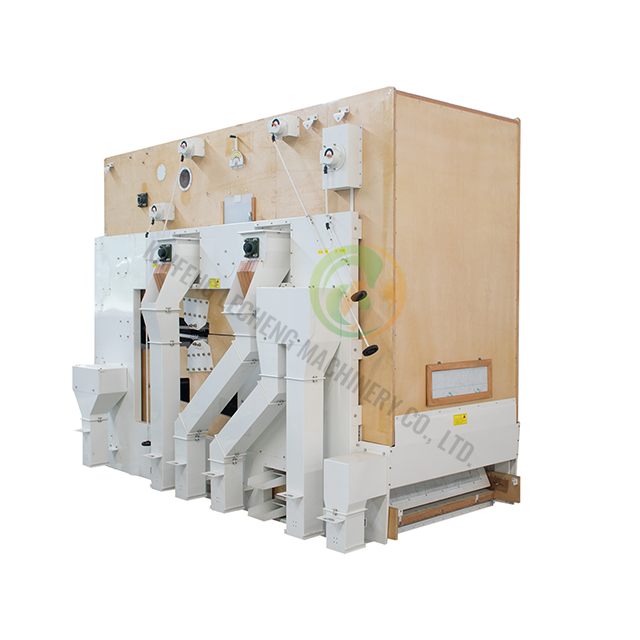
Advanced Configurations: Evaluating the 5X Air Screen Seed Cleaner
The "5X" Distinction
Standard models perform very basic separation tasks. Advanced equipment goes much further in processing capability. The 5X air screen seed cleaner stands out significantly. It typically integrates a robust, low-breakage bucket elevator. These models feature highly precise dual dust catchers. They also include expanded vertical screen trunks. Some advanced setups even pair directly with a specific gravity table. This integration delivers ultimate product refinement.
Beyond Cleaning to Grading
Modern units serve dual commercial purposes perfectly. Multi-deck configurations add immense operational value. The system functions simultaneously as a seed grading machine. It sorts viable seeds by uniform physical size. Precision planting equipment requires this exact physical uniformity. Planters jam frequently when fed unevenly sized kernels. Farmers demand strictly graded lots for optimal field performance.
Environmental & Safety Controls
Facility dust control remains strictly non-negotiable today. Integrated cyclone dust collectors protect internal air quality. They capture fine particulates very efficiently. This collection process ensures strict compliance regarding combustible dust regulations. Heavy dust accumulation poses severe explosion hazards. Proper cyclone venting mitigates this risk entirely. Facility workers experience a much safer operational environment overall.
Evaluation Criteria for Procurement: Features That Drive Outcomes
Airflow Adjustability
Avoid older manual baffling systems. Look for Variable Frequency Drive fans instead. VFDs offer highly repeatable air column control. Operators can dial in exact digital settings effortlessly. Different crops require vastly different aerodynamic lift forces. VFD technology allows instantaneous adjustments during live runs. This prevents frustrating trial-and-error setups.
Screen Accessibility and Downtime
Measure mechanical screen changeover times carefully. Fast swap mechanisms are absolutely critical. Modern facilities handle multiple crop types weekly. Lengthy changeovers kill operational efficiency entirely. Quick-release clamps save hours of manual labor. Slide-out tracks allow single operators to swap heavy decks safely. Prioritize machines built for rapid transition.
Screen Cleaning Mechanisms
High-volume runs cause screen blinding constantly. You must assess the under-screen cleaning designs carefully. Rubber ball trays bounce rapidly and clear clogged holes. Traveling brush systems sweep decks clean continuously. Both designs ensure highly reliable continuous throughput. Worn rubber beaters will fail to clear the mesh. Easy access to these cleaning components remains essential.
Build Quality & Wear Components
Machine frames must withstand constant heavy vibration. Flimsy steel welds crack over time under stress. Heavy-duty powder-coated carbon steel provides excellent longevity. Check the market availability of replacement screens. Heavy-duty bearings ensure long-term operational reliability. A well-built frame reduces destructive resonance. It keeps the decks moving smoothly without violent shaking.
Feature Comparison Overview
| Feature Category | Standard Model Expectations | Advanced 5X Model Expectations |
| Air Aspiration | Single primary air channel | Dual precision air channels |
| Grading Capability | Basic sizing (2 active decks) | Multi-stage grading (up to 4 decks) |
| Dust Management | Basic external fan exhaust | Integrated heavy-duty cyclone collectors |
| Screen Cleaning | Basic rubber ball trays | Enhanced brushes or high-density beaters |
Implementation Realities and Facility Integration Risks
The Operator Learning Curve
A commercial grain cleaner requires specific operational skill. It is never simply plug-and-play. Operators must balance internal fan speeds accurately. They must adjust mechanical screen pitch carefully. Feed rate dictates the overall efficiency entirely. Poor calibration causes good seed loss immediately. Proper training minimizes these highly costly errors.
Common mistakes operators make include:
- Running the primary aspiration fan too high, blowing viable product into the chaff bin.
- Feeding raw material faster than the screen square footage can efficiently sift.
- Failing to replace worn rubber beating balls, leading to severe screen blinding.
- Ignoring belt tensioning, causing inconsistent vibration frequencies across decks.
Facility Footprint and Feed Logistics
Measure your available overhead clearance carefully. Intake bucket elevators require significant vertical space. Plan exact chute routing for multiple discharge points. Evaluate your structural flooring requirements thoroughly. Heavy machinery needs serious physical vibration dampening. Installing rubber isolation mounts prevents structural floor damage. Proper logistical planning ensures smooth material transitions.
Follow this basic material flow sequence for optimal layout planning:
- Raw bulk material enters the lower intake hopper.
- An elevator lifts the material to the primary aspiration trunk.
- Material drops onto the upper scalping deck for coarse separation.
- The middle and lower sifting decks catch fine particles.
- Cleaned and graded material exits through designated bagging chutes.
Maintenance Overhead
A professional seed cleaning machine demands strict upkeep. Set regular daily inspection schedules. Monitor steel screen wear closely. Check drive belt tensioning weekly. Clear dust cyclones out regularly to maintain suction. Empty the chaff bins before they back up into the fan. Diligent maintenance preserves your baseline purity outcomes perfectly.
Conclusion
Air screen cleaners form the processing foundation. They are strictly non-negotiable for modern commercial lines. They directly impact final product grades and profitability. Base your shortlisting decisions on specific crop profiles. Calculate your required tons per hour exactly. Consider your crop changeover frequency carefully. Review your facility layout constraints first. Request empirical test runs soon. Have manufacturers use your specific raw samples.
FAQ
Q: What is the difference between a grain cleaner and a seed cleaning machine?
A: While technically similar, seed cleaning machines typically feature tighter tolerances, finer screen increments, and more precise air control to ensure high germination rates, whereas grain cleaners focus on bulk volume processing for feed or food.
Q: How often do the screens need to be replaced?
A: Screen lifespan depends on the abrasiveness of the crop and processing volume. Typically, high-wear screens require inspection every season and replacement every 1–3 years.
Q: Can an air screen cleaner remove seeds of the exact same size but different weights?
A: Only to a limited extent via the aspiration column. For precise weight-based separation of identically sized seeds, a gravity separator must be added downstream.
Q: How do I prevent screen clogging (blinding) during operation?
A: Ensure the machine is equipped with functional rubber ball beaters or traveling brushes beneath the screen decks, and verify that the feed rate does not exceed the screen's square footage capacity.


