Investing in milling infrastructure carries extremely high operational stakes. You risk significant capital expenditure upfront when launching these facilities. Many buyers focus strictly on initial equipment prices. This narrow focus often leads to poor extraction rates. You also face inflated energy costs and compromised food safety. We must prioritize technical specifications over basic price tags. Proper evaluation ensures your long-term profitability. It also guarantees reliable, safe flour output. You need an evidence-based framework for evaluating these technical details. This article provides exact benchmarks to guide your buying process. You will learn how to assess capacity, yield drivers, and compliance standards effectively. We will help you select the right equipment for your specific market.
Key Takeaways
- Extraction rate and power consumption (kW/ton) are the primary indicators of a plant's operational profitability.
- Aligning plant capacity (tons per day) directly with local market demand prevents costly over-engineering or bottlenecking.
- Food safety compliance relies heavily on material specifications (e.g., stainless steel contact parts) and dust control systems.
- Evaluating a maize processing plant supplier requires looking past the equipment to assess installation support, warranty terms, and spare parts availability.
1. Aligning Capacity Specs with Business Objectives
Defining Throughput (Tons Per Day / TPD)
You must start by defining Tons Per Day (TPD) accurately. Do not guess your required capacity. You must match machine output to your raw material supply. Analyze your daily grain intake capabilities first. Next, evaluate your target market size thoroughly. An oversized mill wastes precious operating capital. An undersized mill creates severe delivery bottlenecks. Calculate your actual operating hours realistically. Most profitable mills run 24 hours across three shifts. Operating fewer hours demands a higher capacity machine to hit daily targets. You should always factor in scheduled maintenance downtime. This ensures your daily quota remains achievable.
Commercial Flour Production Requirements
Commercial facilities require highly precise grading parameters. A commercial flour production maize processing plant processes massive volumes consistently. Community mills focus on smaller, diverse batches. Commercial lines need automated packaging and advanced sifting. They separate super maize meal from standard meal efficiently. You must specify the exact particle size your market demands. Different regions prefer varying degrees of flour fineness. High-capacity operations also require bulk storage silos. They cannot rely on manual bagging alone. These requirements directly influence the machinery you must purchase.
Footprint and Civil Engineering Realities
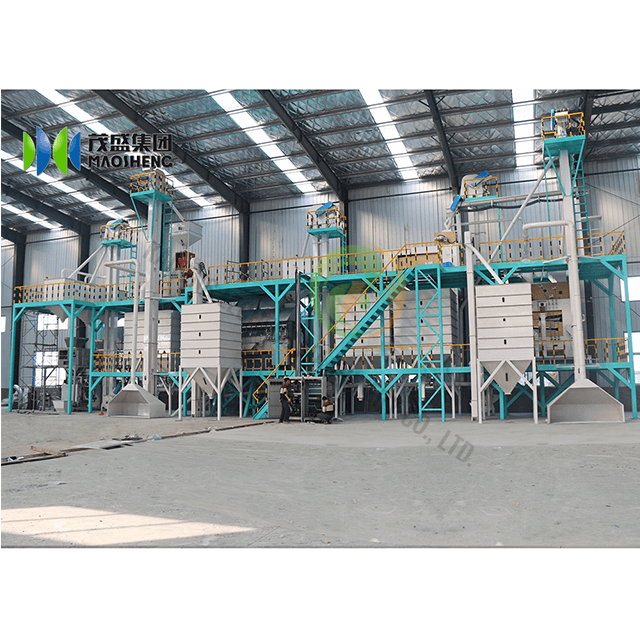
Equipment requires substantial physical space. Calculate your required floor space very early. Determine the optimal building height accurately. Multi-story buildings rely on gravity flow between machines. They save considerable elevator power over time. Steel structure platforms offer faster installation timelines. Review the foundational load-bearing requirements closely. High-capacity mills vibrate intensely during operation. You need heavily reinforced concrete floors. Common civil engineering mistakes include:
- Failing to account for raw material storage space.
- Ignoring the clearance needed for maintenance access.
- Underestimating the concrete thickness for roller mill foundations.
- Forgetting to plan for adequate ventilation and natural light.
2. Core Maize Processing Plant Specifications That Drive Yield
Cleaning and Degermination Efficiency
Profitable yield starts directly at the cleaning stage. Evaluate the vibrating screens and destoners carefully. Look closely at the degerminators. You need verifiable germ extraction percentages. High germ removal improves flour shelf life significantly. It also increases your by-product value immensely. Maize germ sells well for oil extraction. Best practices dictate removing at least 85% of the germ. Failing to remove germ leads to rancid flour. It ruins your brand reputation quickly.
Milling and Sifting Ratios
Roller mills physically crush the grain. You must assess roller mill diameter and length. Check the built-in cooling mechanisms too. Hot rollers degrade flour quality rapidly. They damage essential nutrients during grinding. Next, check the plansifter surface area. Large surface areas improve flour grading accuracy. Review these maize processing plant specifications before signing contracts. Adequate sifting prevents coarse particles from ruining fine flour. You should match the sifter size to your roller mill output perfectly.
Expected Extraction Rates
Let us discuss realistic operational benchmarks. Super maize meal typically hits specific yield targets. Sifted meal and maize bran have different ratios. Beware of overly aggressive sales promises. Avoid suppliers promising unrealistic 90%+ pure flour yields. Pure flour physically cannot exceed the grain's endosperm ratio. The endosperm generally makes up 80% to 84% of the kernel.
| Flour Grade / By-Product | Realistic Yield Percentage | Primary Usage |
| Super Maize Meal | 75% - 80% | Premium human consumption |
| Standard Sifted Meal | 80% - 85% | General human consumption |
| Maize Germ | 8% - 10% | Oil extraction industry |
| Maize Bran | 10% - 14% | Animal feed manufacturing |
Energy Consumption Metrics
Power dictates your daily operational overhead. Evaluate the total installed power (kW). Compare it to actual running power. You measure this per ton of processed maize. This metric accurately forecasts your utility overhead. High-efficiency motors save serious money annually. Ask suppliers for guaranteed power consumption curves. Do not accept vague energy estimates. A highly efficient 50 TPD plant runs differently than an older model. You must verify these numbers against local electricity rates.
3. Standard vs. Custom Maize Processing Plant Configurations
Off-the-Shelf vs. Tailored Solutions
Standard plants fit average needs very well. However, regional grains vary significantly in density. You might process maize containing higher moisture. A custom maize processing plant becomes necessary here. Tailored solutions adapt to your specific grain profile. They prevent blockages in the pneumatic conveying system. Standard systems often struggle with excessively hard flint corn. Custom systems employ specialized roller fluting to handle this. You should analyze your local grain supply before deciding.
Modularity and Scalability
Your business will likely grow over time. Assess the plant's scalability early. Can you add extra roller mills later? Does the layout permit new packing scales? Modular systems prevent complete plant overhauls. They let you expand capacity smoothly. You save money by planning for expansion now. A good design leaves physical space for future machinery. It also ensures the main control panel handles additional loads.
Automation Level
You must choose your control system wisely. Manual plants rely on intensive, error-prone labor. Semi-automatic systems balance upfront cost and operational control. Fully PLC-controlled systems offer maximum consistency. Weigh the upfront cost of PLC systems carefully. They offset costs through long-term labor savings. They also guarantee consistent product quality across shifts. We recommend PLC systems for any plant over 50 TPD. Human error costs too much in high-volume operations.
- Manual control: Best for micro-mills under 20 TPD.
- Semi-automatic: Ideal for 30-50 TPD regional operations.
- Fully PLC-controlled: Mandatory for 100+ TPD commercial facilities.
4. Material Durability and Compliance Standards
Construction Materials
Material choice directly impacts machinery longevity. Carbon steel rusts heavily over time. Food-grade stainless steel (304/316) resists corrosion perfectly. You must use stainless steel for all product-contact areas. It prevents dangerous cross-contamination. It also withstands harsh chemical washdowns. Moisture in the grain easily rusts cheap metal. Rusty pipes degrade flour color and safety. Always demand material certificates from your manufacturer.
Sanitation and Dust Control
Flour dust poses serious health risks. Evaluate the pneumatic lifting systems thoroughly. Check the pulse dust collectors meticulously. Effective aspiration specs matter immensely. They protect worker safety daily. They also prevent catastrophic dust explosions. Clean air promotes a highly hygienic facility. You must maintain negative pressure inside the milling equipment. This keeps the dust contained within the system. Regular filter replacement schedules are mandatory for safety.
Regulatory Certifications
Compliance keeps your factory doors open. Equipment must meet strict international standards. Ensure your machinery carries ISO or CE marks. Check your regional food safety regulations. Manufacturing standards validate the equipment's build quality. Commercial operations demand these certifications for audits. Major supermarket chains require proof of hygienic processing. You cannot supply them using uncertified, substandard equipment.
5. Vetting Your Maize Processing Plant Supplier: Beyond the Spec Sheet
Installation and Commissioning Terms
The hardware represents only half the battle. Clarify who bears the installation costs. Define responsibility for civil works and equipment erection. Initial test runs require expert engineering oversight. Get these terms in writing immediately. Some suppliers abandon you after delivery. You must demand on-site commissioning engineers. They calibrate the rollers for optimal flour yield. They also test the dust collection systems under full load.
Warranties and Wear Parts
Milling machinery consumes parts very rapidly. Identify the standard lifespan of high-wear items. Rollers, screen meshes, and elevator buckets degrade constantly. You need solid guarantees on spare parts availability. Fast-tracked local spares prevent devastating production downtime. Evaluate every maize processing plant supplier on their parts network. Ask them for a recommended two-year spare parts list. Purchase this list alongside your main machinery order.
Training and Handover
Your staff runs the plant eventually. The supplier must provide comprehensive operational training. Basic maintenance training is equally critical. Skilled operators minimize unplanned downtime drastically. A proper handover ensures a smooth production launch. The training should cover:
- Safe start-up and shutdown procedures.
- Adjusting roller mill gaps for different flour grades.
- Replacing plansifter meshes quickly.
- Troubleshooting pneumatic blockages safely.
Conclusion
The best facility perfectly matches your exact business model. Capacity, power efficiency, and extraction rates must align seamlessly. Do not buy blindly based on generic catalog prices. Find a reliable maize processing plant that serves your specific market demands. Prioritize stainless steel components and advanced dust control. These elements protect your investment and your workers. Always request a detailed, itemized technical proposal. Ask for complete flow charts. Demand precise power consumption data. Reject basic price lists entirely. Take these steps to secure a highly profitable milling operation.
FAQ
Q: What is a good extraction rate for commercial maize flour?
A: Realistic extraction rates depend heavily on the desired flour grade. For high-quality super maize meal, expect extraction rates between 75% and 80%. Producing standard sifted meal can push yields slightly higher, up to 85%. The remaining percentage primarily consists of maize bran and germ. Be highly skeptical of claims exceeding 85% for premium grades.
Q: How much power does a standard 50 TPD maize processing plant consume?
A: A standard 50 Tons Per Day facility typically features an installed power ranging from 120 kW to 160 kW. However, actual running power usually sits around 75% to 80% of the installed capacity. You must thoroughly check your local grid capacity before installation. Securing stable three-phase power prevents frequent motor burnouts.
Q: What are the hidden costs when buying maize milling machinery?
A: Buyers often overlook several significant hidden costs during procurement. Shipping fees and import duties add substantial expenses. Civil works, including reinforced concrete foundations, require large budgets. You also face costs for initial operational training and the raw materials used during test runs. Always budget an extra 15% for these incidentals.
Q: How long does it take to install and commission a mid-sized plant?
A: Installing a mid-sized facility requires careful planning and time. Once the equipment arrives on site, installation typically takes 30 to 45 days. Commissioning and initial test runs add another 7 to 14 days. Expect a total timeline of roughly two months from delivery to your very first commercial production run.


