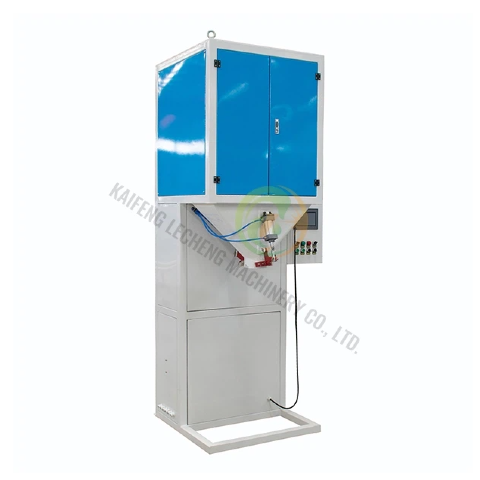
Packaging is where many grain and seed lines either stay efficient or start to slow down. An automatic packing scale is the piece of equipment that turns the final stage of weighing and bagging into a controlled, repeatable operation instead of a labor-heavy bottleneck. For grain processors, seed plants, feed lines, and other bulk material businesses, that matters because the last step of production still affects labor cost, bag consistency, delivery speed, and product presentation. At Kaifeng Lecheng Machinery Co., Ltd., packaging equipment is developed as part of a wider grain and seed processing workflow, so the machine is meant to work in real production lines rather than as an isolated device.
What an automatic packing scale actually does
More than a scale
An automatic packing scale is not simply a machine that measures weight. In practical use, it is part of a packaging workflow that controls product feeding, target weight, bag clamping, discharge, and the handoff to sewing or sealing. That is why buyers who first search for an automatic bagging machine often find that the real value is not only weighing accuracy, but how smoothly the machine turns bulk material into finished bags with less interruption and less manual correction. In other words, the machine does not just weigh the product. It organizes the end of the line.
Where it fits in a real production line
In a working plant, the automatic packing scale sits at the end of processing, where cleaned, graded, dried, or blended material is ready for packing. For grain and seed businesses, this is a critical transition point. Everything upstream may run well, but if bagging is still inconsistent or too dependent on labor, the whole line loses rhythm. That is why packaging equipment matters so much in commercial operations. It becomes the link between processed material and finished saleable product. A machine in this position has to do more than fill bags. It has to keep pace with the rest of the system and deliver output that is accurate, neat, and easy to move into storage or shipment.
How an automatic packing scale works in one full cycle
Product feeding and coarse-to-fine dosing
A full packing cycle begins with material entering the system in a controlled way. This stage often determines whether the machine will reach the target weight efficiently or constantly need correction. Good feeding control allows the machine to approach the set weight quickly with bulk feeding and then refine the final amount with a more precise dosing action. That balance matters because speed without control creates giveaway and inconsistency, while excessive caution slows the line too much. Kaifeng Lecheng Machinery describes its DCS series with two feeding systems designed for fast and precise dosing, which is exactly the kind of combination many users need when product flow has to stay both quick and accurate.
Weighing, bag clamping, and controlled discharge
Once the product reaches the weighing stage, the machine measures it against the preset target and prepares for filling. This is where the automatic packing scale becomes much more useful than a simple weighing station. The bag is held in place, the product is discharged in a controlled way, and the filling step happens with less dependence on operator judgment. Stable bag clamping matters because inaccurate holding can affect filling speed, reduce neatness, and create more interruption in continuous work. A well-designed cycle allows the product to move from weighing to bag filling with fewer pauses and with more reliable bag-to-bag consistency.
Sealing, sewing, and conveyor transfer
The cycle does not truly end when the bag reaches target weight. After filling, the bag still needs to move smoothly toward closing and transfer. That is why many automatic packing scales are designed to connect with conveyors, bag-sewing machines, or sealing machines. This turns one machine into part of a larger packaging line rather than a stand-alone device that still depends on slow manual handling afterward. In real commercial settings, this integration is one of the biggest reasons businesses upgrade. The goal is not only to fill a bag correctly, but to create a packaging station that moves cleanly from weighing to closure to line discharge.
Function | Manual packing | Automatic packing scale |
Weight control | Operator-dependent | Program-controlled |
Speed | Lower and variable | Higher and more stable |
Labor demand | Higher | Lower |
Product giveaway | More likely | Better controlled |
Bag consistency | Less uniform | More uniform |
Line integration | Limited | Easy to connect |
The features that matter most in daily use
Accuracy and repeatability
Accuracy is one of the first things buyers ask about, but in daily use repeatability is just as important. A machine that fills one bag correctly and the next bag loosely does not solve a packaging problem. Businesses care about stable bag-to-bag control because it affects order consistency, customer trust, and internal material loss. Kaifeng Lecheng Machinery states that its DCS auto packing scale supports automatic electronic quantitative weighing and, on the featured product page, lists weighing accuracy up to ±0.2 percent. For users, the real meaning of that specification is practical rather than abstract: less product giveaway, fewer off-weight bags, and fewer corrections after filling.
Speed, changeovers, and operator control
Automation is often associated with speed, but speed alone does not make a packaging line useful. Daily production usually involves changes in material type, bag size, or target weight, so the machine must also be easy to adjust. A good automatic packing scale should let operators move between settings without creating a long interruption or a confusing workflow. Kaifeng Lecheng Machinery highlights a user-friendly interface and flexible adaptation to different packaging requirements, which is important because a grain or seed line rarely stays fixed forever. The best result is a machine that supports fast output when needed and practical control when conditions change.
Durability, hygiene, and maintenance access
Packaging equipment often works for long hours in demanding production environments, so construction quality matters. Dust, continuous movement, contact surfaces, and routine cleaning all affect service life and operating stability. The product page for the company’s quantitative weighing auto packing scale notes stainless steel construction, modular design, and easier disassembly and cleaning, with optional Clean-in-Place support for higher sanitary requirements. For users in food, seed, or chemical applications, this matters because a machine should not only run accurately when new. It should remain practical to clean, maintain, and operate over time.
Why businesses move from manual packing to automation
Labor pressure, output pressure, and packaging bottlenecks
Many businesses first consider automation because the packaging point starts slowing down the line. Manual filling may work for small volume, but once output rises, it becomes harder to keep weight consistent, maintain speed, and manage labor efficiently at the same time. One operator may fill fast but imprecisely, while another may fill accurately but too slowly. Over time, that creates a bottleneck between processing and finished goods. An automatic packing scale becomes relevant at exactly this stage because it turns a variable manual task into a more stable process that can grow with the rest of the production line.
Better control over cost, waste, and finished presentation
Businesses do not move to automation only because they want fewer hands on the line. They also want better control over material use and product presentation. If every bag is slightly overfilled, the loss may look small in one shift but grow significantly across long production runs. If every bag looks slightly different, the product appears less professional even when the material itself is good. Better packaging control improves both internal efficiency and external presentation. That is especially important for companies shipping standardized bags to distributors, farms, dealers, or export markets where consistency is part of commercial credibility.
Where an automatic packing scale creates the most value
Grain, seed, feed, and granular chemical applications
One reason this machine category is widely used is that the same packaging logic applies across many bulk materials. The DCS series on the company website is presented for free-flowing granular materials such as rice, maize, wheat, soybean, cotton seed, grass seed, sugar, feedstuff, amino acid, urea, and other granulated products. That range matters because it shows how the machine fits real production needs across agriculture and light industry. For companies already processing grain or seed, the packaging station should be able to keep up with the rest of the line without forcing a completely different operating style. A flexible quantitative weighing packing system is valuable precisely because it can serve multiple materials while maintaining the same core workflow.
When a DCS-style system becomes the practical next step
A DCS-style automatic packing scale becomes especially useful when a business has already improved cleaning, grading, drying, or conveying, but still finishes the line with a less controlled packing step. At that point, the packaging station is no longer a small detail. It becomes the visible point where productivity, labor efficiency, and bag consistency either match the rest of the line or fall behind it. Kaifeng Lecheng Machinery positions its DCS series as equipment that can connect quickly to existing lines and support automatic quantitative feeding, bagging, sealing, and quality control. For growing operations, that makes it a practical next step rather than an unnecessary extra. When upstream production becomes more professional, the bagging section has to become more professional as well.
Conclusion
An automatic packing scale is the equipment that turns weighing and bagging from a variable manual task into a precise and repeatable packaging process. It helps control feed, target weight, bag handling, closure, and transfer so the end of the line works with the same discipline as the rest of production. For grain, seed, feed, and other bulk material processors, that means better efficiency, more stable output, and a more professional finished product. For businesses ready to improve packaging performance, a DCS Auto Packing Scale can be the practical link between processed material and finished bags that are ready for storage, shipment, or sale. Kaifeng Lecheng Machinery Co., Ltd. supplies grain and seed processing equipment from single machines to turnkey systems, and its automatic packing scale solutions are designed to support real commercial workflows. Contact us to discuss the right packaging setup for your operation.
FAQ
What does an automatic packing scale do?
An automatic packing scale combines quantitative weighing with bagging so bulk materials can be packed more accurately and with less manual correction. It can also connect with conveyors, sewing machines, or sealing machines to form a more complete packaging line.
Is an automatic packing scale only used for grain?
No. The DCS series shown by Kaifeng Lecheng Machinery is presented for multiple free-flowing granular materials, including rice, maize, wheat, soybean, seeds, sugar, feedstuff, and some granulated chemical materials.
Why is weighing accuracy important in bagging?
Stable weighing accuracy helps reduce off-weight bags, lowers product giveaway, and improves consistency from one bag to the next. That matters for both cost control and finished product presentation.
When should a business move from manual packing to an automatic bagging machine?
The move usually makes sense when manual packing starts creating a bottleneck, labor cost rises, bag weights become inconsistent, or the business needs a faster and more stable packaging workflow to match upstream production.


