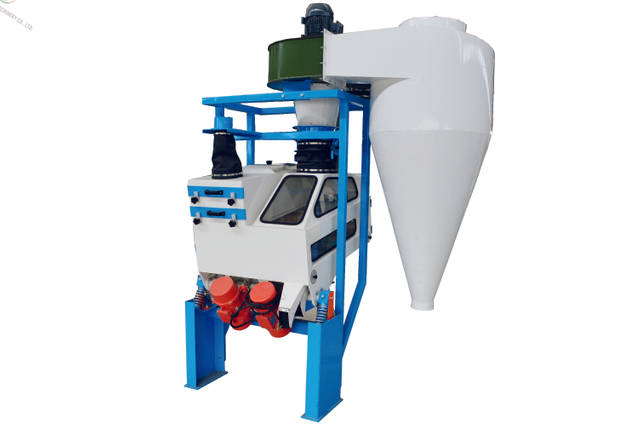
Mismatched packaging equipment creates silent profit leaks inside grain facilities. You might not see the daily losses immediately. However, over-sizing your machinery wastes precious capital expenditure upfront. Conversely, under-sizing creates severe production bottlenecks. Inaccurate scales inevitably lead to material giveaway, draining your profit margins daily. They can also cause underweight bag rejections, triggering serious compliance issues and damaging buyer trust. Our goal is to shift your perspective entirely. Stop thinking about merely buying a standalone machine. Instead, focus on integrating a comprehensive yield-protection system. Evaluating an automatic packing scale requires careful balancing. You must weigh required throughput against pinpoint precision. You also need to account for specific material flow characteristics. In this guide, we will explore exactly how to correctly size your equipment. You will learn how to optimize line speeds, maintain accuracy, and protect your bottom line.
Key Takeaways
- Sizing relies on three primary variables: target weight range, required throughput (bags per minute), and the specific bulk density/flowability of the grain.
- Selecting the right automatic packing scale specifications minimizes material giveaway, directly impacting the ROI timeline.
- Physical footprint (headroom) and upstream/downstream integration dictate whether you need a standard or custom automatic packing scale.
- Partnering with an automatic packing scale supplier who conducts Factory Acceptance Testing (FAT) with your actual product is critical to mitigating implementation risk.
The Financial Impact of Sizing: Balancing Speed and Accuracy
Sizing packaging equipment goes far beyond matching a machine to a floor plan. Financial outcomes depend entirely on balancing speed and accuracy. Facility managers often prioritize speed over precision. This mistake proves costly over time.
The Giveaway vs. Throughput Trade-off
Pushing a scale past its rated capacity severely degrades weighing accuracy. You might desire faster bagging speeds. But speed often sacrifices precision. Consider the hidden cost of material giveaway. Imagine running a 0.5% overweight margin on a 50kg bag of premium seed. This equals 250 grams of free product per bag. If your line runs 12 bags per minute, you lose 3 kilograms every minute. Over a standard eight-hour shift, this totals 1,440 kilograms of lost inventory. Over a year, this tiny fraction adds up to massive annual financial losses. Precision always pays for itself.
Overall Equipment Effectiveness (OEE)
We define success through OEE metrics. These metrics measure availability, performance, and quality. The right scale must match your upstream processing speed exactly. It should never cause downstream bagging logjams. If your bagging line runs slower than your grain cleaner, you create a severe chokepoint. If it runs faster than your palletizer, bags pile up on the conveyor. Proper sizing ensures harmonious continuous flow across the entire facility.
Long-Term Upkeep and Wear Factors
Frame your sizing decision around long-term maintenance realities. Actuator choice drastically impacts equipment longevity. Compare pneumatic cylinders against servo-driven actuators. High-speed lines wear out pneumatic seals quickly. Servo motors deliver precise, repeatable gate control. They handle high-cycle operations better over time. Think about the frequency of calibration as well. Constant vibration forces frequent zeroing on undersized load cells. Proper sizing reduces mechanical stress and extends component life.
Defining Your Automatic Packing Scale Specifications
Defining specific operational requirements narrows down your equipment choices. You must align your production goals with concrete technical parameters. The right automatic packing scale specifications dictate everyday reliability.
Target Weight Ranges
You must first determine your minimum and maximum fill weights. For instance, you might pack bags ranging from 5kg to 50kg. Scales operate most accurately in their mid-to-upper load ranges. A load cell rated for 100kg lacks the sensitivity to measure a 5kg drop accurately. Using a massive 50kg scale to fill 5kg bags sacrifices precision completely.
- Best Practice: Keep your bag weights within 20% to 80% of the load cell's maximum capacity.
- Common Mistake: Buying one oversized scale hoping it will handle every possible bag size efficiently.
Production Volume (Speed)
Calculate your required Bags Per Minute (BPM). Alternatively, use Tons Per Hour (TPH). Production speed dictates the physical architecture of the machine.
- Single Scales: Good for lower throughput (up to 6-8 BPM). A single load cell requires settling time before confirming the weight.
- Duplex/Triplex Scales: Multi-head scales fit high-throughput lines perfectly. While one hopper fills, the other drops. This alternating rhythm doubles or triples your speed without losing accuracy. Introduce multi-head scales for high-throughput lines where a single load cell cannot settle fast enough.
Weighing Technology Comparison
Compare net weighers against gross weighers. Net weighers calculate mass in a hopper before dropping product into the bag. This method is exceptionally fast. Gross weighers calculate mass inside the bag itself as it fills. Gross weighers are slower but better for limited headroom.
| Technology Type | Mechanism | Speed Capability | Best Application |
| Net Weighing | Weighs in internal hopper | High (10-24+ BPM) | High-volume grain lines |
| Gross Weighing | Weighs directly in the bag | Low to Medium (4-8 BPM) | Low-headroom facilities |
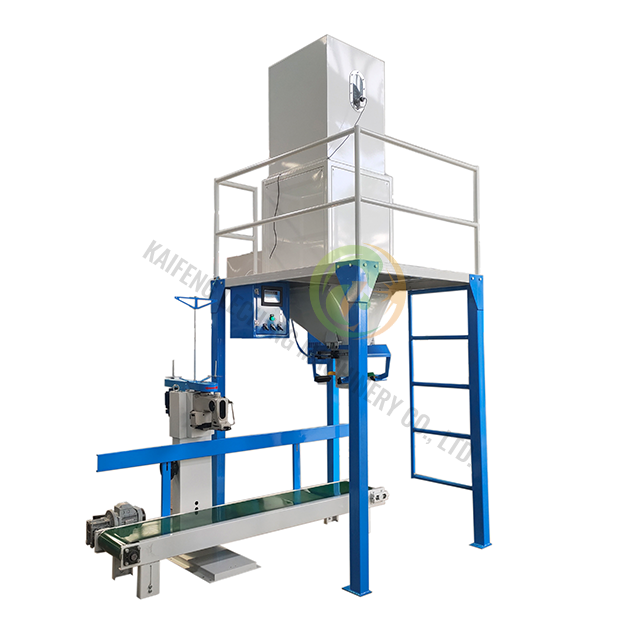
Matching the Grain Packaging Automatic Packing Scale to the Material
Every agricultural product behaves differently inside a steel hopper. A grain packaging automatic packing scale must match the physical characteristics of the crop.
Flowability and Bulk Density
Analyze how different grains behave under gravity. Whole corn flows easily. Soybeans bounce. Dusty materials like certain feeds or milled grains require completely different handling. These sticky materials clump together. They bridge over discharge gates, halting production entirely. Bulk density variations also matter. A 50kg bag of dense wheat requires a smaller bag than 50kg of light oats. Your hoppers must accommodate the volumetric differences.
Feeding Mechanisms
The feeding mechanism controls how grain enters the weigh hopper. Incorrect feeders ruin accuracy. Proper feeders ensure a smooth transition from bulk flow to trickle flow.
| Feed Type | Material Characteristics | Operational Efficiency |
| Gravity Feed | Best for free-flowing grains (rice, corn, wheat). | Low maintenance, highly efficient. Uses gravity gates. |
| Vibratory Pan | Semi-free-flowing or irregular pieces (seeds, mixed feed). | Necessary to prevent bridging. Ensures consistent trickle feed. |
| Belt Feed | Sticky, non-free-flowing, or fragile materials. | Gentle handling. Highly accurate but requires more cleaning. |
Dust Control & Environmental Factors
Agricultural processing generates massive amounts of particulate matter. Airborne dust threatens mechanical longevity. Highlight the necessity of enclosed systems. Dust extraction ports protect the load cells from particulate accumulation. Build-up on a load cell skews weight readings instantly. Furthermore, combustible dust poses severe explosion risks. Implementing proper dust control maintains a safe, compliant facility adhering to strict industry standards.
Standard vs. Custom Automatic Packing Scale Configurations
No two packaging facilities look identical. You must adapt equipment to fit reality. Sometimes off-the-shelf solutions work perfectly. Other times, spatial layouts demand specialized engineering.
Spatial Constraints
Address implementation realities early in the planning phase. Many legacy facilities lack the vertical headroom required for standard net-weighing systems. Net weighers stack a surge bin, a weigh hopper, and a discharge chute vertically. This stack easily demands 12 to 14 feet of clearance. If your roof sits at 10 feet, standard equipment fails. You must evaluate ceiling heights, floor load limits, and forklift access lanes.
Line Integration
Your scale does not operate in isolation. Discuss the requirements for syncing the scale across the production floor. You must integrate it with automated bag placers. The discharge timing must match sewing machines or heat sealers. Finally, the outfeed conveyors must align perfectly with robotic palletizers. A mismatched Programmable Logic Controller (PLC) causes integration nightmares. Ensure all communication protocols speak the same digital language.
When to Customize
Identify scenarios where a custom automatic packing scale is absolutely necessary. Customization solves unique problems.
- Corrosive Environments: Handling treated seeds or fertilizer blends requires specialized 304 or 316 stainless steel to prevent rust.
- Tight Clearances: Retrofitting equipment into tight mezzanine spaces demands low-profile, custom-welded frames.
- Specialized Flows: Unique multi-ingredient blends might require custom dual-feed funnels.
- Sanitation Needs: Food-grade applications need washdown-rated motors and crevice-free hoppers.
Shortlisting Your Automatic Packing Scale Supplier
Selecting the right vendor protects your capital investment. A poorly supported machine becomes an expensive steel paperweight. Rigorous vetting separates genuine partners from mere salesmen.
Evidence-Based Vetting
Avoid relying on glossy marketing brochures. Brochures always show perfect conditions. Require potential suppliers to prove accuracy claims based on your specific grain type. Ask for video demonstrations. Request case studies from similar agricultural facilities. A reputable vendor gladly provides references. Call those references and ask about equipment downtime and real-world bagging speeds.
Factory Acceptance Testing (FAT)
Never skip the testing phase. Insist on sending actual material samples to the supplier's facility. Run live speed and accuracy tests before equipment ships. Factory Acceptance Testing (FAT) identifies bridging issues before the machine reaches your floor. It confirms PLC logic. It verifies target weights under continuous operation. Finding a flaw during FAT costs nothing. Finding a flaw during installation costs thousands.
Post-Sale Support & Parts Availability
Hardware eventually breaks. Your supplier's response time dictates your downtime. Evaluate the supplier's Service Level Agreements (SLAs). Determine the availability of local technicians. Furthermore, scrutinize the parts list. An ideal automatic packing scale supplier uses non-proprietary, off-the-shelf components. Standard PLC brands and universal load cells allow you to source replacements locally. Proprietary circuit boards lock you into expensive, slow supply chains.
Conclusion
Sizing packaging equipment requires precision, patience, and clear data. You must balance speed requirements against acceptable accuracy tolerances. Prioritize scales that offer a verifiable balance of speed and precision tailored to the bulk density of your specific grain. Remember, investing in accuracy eliminates material giveaway and boosts your profit margins.
Take immediate action by building a precise Request for Proposal (RFP) before contacting vendors. Document these core metrics:
- Record your upstream processing line speed in Tons Per Hour.
- List all desired target bag weights (minimum and maximum).
- Measure your exact vertical headroom dimensions and floor space constraints.
- Document the specific bulk density of your primary grains.
Providing this data upfront ensures vendors quote systems capable of protecting your daily yields.
FAQ
Q: What is the typical ROI on upgrading to a fully automatic packing scale?
A: ROI is usually calculated via labor reduction and eliminated material giveaway. Highly accurate scales stop you from giving away excess grain. They also reduce the headcount needed for manual bagging. Typical payback timelines range from 8 to 18 months depending on production volume and commodity value.
Q: Can one scale handle multiple bag sizes and different types of grain?
A: Yes, provided the scale has a programmable logic controller (PLC) with recipe memory. Operators can switch profiles easily. However, extreme weight variations (e.g., 1kg vs 50kg) usually require distinct machines for optimal accuracy.
Q: How much headroom is typically required for a net-weigh grain packing scale?
A: Provide realistic spatial expectations. Net-weigh systems generally require 10–12 feet minimum clearance. They stack multiple hoppers vertically. Restricted spaces may require custom low-profile configurations or gross-weighing alternatives to fit properly.