Grain cleaning goes far beyond basic visual aesthetics. It serves as a critical risk-management and yield-recovery step for modern agriculture. Substandard cleaning routinely triggers dockage penalties, severe equipment damage, and serious facility safety hazards. Processors face unique challenges daily. They handle everything from fragile beans to high-volume raw maize. To succeed in this market, buyers must navigate varied and complex technologies. You will easily find air-screens, gravity tables, and sophisticated graders available today. Selecting the right grain cleaning machine requires careful operational planning. You must match your specific processing capacity directly alongside crop-specific vulnerabilities. This reality usually demands a structured multi-stage approach. Relying on a single machine rarely works. Different crops simply behave differently under mechanical stress. Building a sequenced cleaning line remains the true secret to safely reaching strict export-level purity.
Key Takeaways
- Different crops demand specific handling: wheat requires toxin removal, maize needs high-volume debris clearing, and beans require low-impact sorting to prevent splitting.
- Achieving food-grade or export-level purity (often 99.99%) rarely happens with a single machine; it requires a sequenced cleaning line.
- Choosing the wrong equipment can lead to up to 50% loss of good seed through excessive screening or mechanical damage.
- Dust control (vacuum vs. positive pressure) is a crucial safety factor to prevent respiratory hazards and facility dust explosions.
The Business Case: Why Advanced Cleaning is Non-Negotiable
Machinery Protection & Maintenance
Raw crops naturally carry destructive foreign materials from the field. Hard impurities like field stones, metallic fragments, and glass pose massive threats to your processing infrastructure. When these rigid objects bypass initial screening, they crash directly into downstream milling equipment. This causes premature wear on expensive crushing rollers and delicate extrusion dies. Repairing these components halts production lines entirely. Investing in proper primary separation creates a physical shield for your facility. It prevents sudden mechanical failures and keeps daily operations running smoothly.
Best Practice: Always install strong magnetic separators at the primary intake hopper. Operators should clean these magnets daily to prevent saturation and metal slippage.
Risk Mitigation (Dust Explosions)
Facility safety relies heavily on effective grain cleaning. Airborne agricultural dust is highly combustible. When stray metal strikes steel machinery components, it creates high-temperature sparks. If a spark enters a confined space filled with suspended grain dust, it acts as an ignition source. This precise combination is a leading cause of catastrophic mill explosions worldwide. Modern cleaning equipment actively neutralizes this threat. Quality machines remove the spark-generating metals early. They also utilize advanced aspiration systems to pull explosive dust out of the processing environment safely.
Maximizing Market Value
Cleaning directly impacts your profit margins per ton. Standard harvested crops often contain mud balls, weed seeds, and shriveled kernels. Leaving these elements in the batch degrades the overall product quality. Buyers strictly penalize shipments containing high dockage levels. Removing these specific impurities elevates standard crops into premium food-grade or seed-grade products. High-purity batches command significantly higher prices on the commodity market. Efficient cleaning transforms agricultural waste into pure, tradable value.
Crop-Specific Challenges: Wheat, Maize, and Beans
Wheat (Toxins and Fungi)
Wheat requires precise biological management. The primary threats are lightweight biological contaminants rather than heavy stones. Field wheat often carries fusarium-infected kernels. These diseased kernels introduce vomitoxin into the food supply. You must remove them entirely to pass strict compliance tests and ensure food safety. A specialized wheat cleaning machine must target these lightweight biological threats accurately. It utilizes finely tuned aerodynamic suction to lift away infected, shriveled kernels while leaving healthy, dense grains untouched.
Common Mistake: Failing to adjust airflow settings when processing wheat with higher moisture content. Wet chaff weighs more and requires stronger aspiration to separate successfully.
Maize/Corn (High Volume & Stalks)
Processing maize demands robust, heavy-duty mechanics. Corn harvests come with massive amounts of bulky field debris. You will encounter large cobs, thick stalks, and heavy stones. A proper maize cleaning machine must handle heavy-duty initial separation without bottlenecking the intake flow. The focus here is on rapid throughput. The screens must withstand significant weight and constant impact. High-volume maize equipment prioritizes aggressive vibration and wide-aperture screening to eject massive debris instantly.
Beans & Legumes (Fragility & Bug Damage)
Legumes present the most delicate processing challenge. Beans are highly prone to physical splitting under impact. A split bean ruins the visual commercial grade immediately. It also destroys the seed's germination rate. Therefore, a bean cleaning machine must prioritize extraordinarily gentle handling. Equipment must also identify and remove mud balls or bug-damaged seeds. These specific defects often share the exact same physical dimensions as healthy beans. You cannot rely on basic size screening alone. You need soft-drop mechanics and precise weight separation.
Core Technologies in Modern Seed Cleaning Equipment
Air-Screen Cleaners (Volume & Weight)
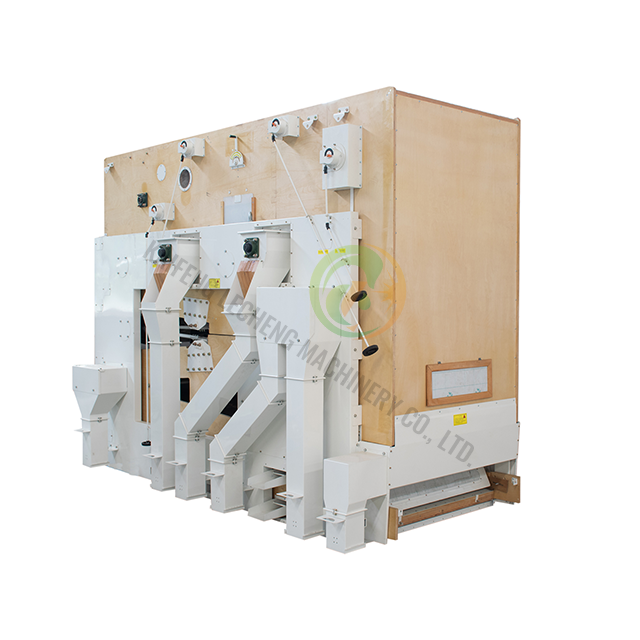
The air-screen cleaner serves as the foundational step for almost all agricultural processing. It uses a powerful dual action to separate materials. First, aspirated air flows through the falling grain curtain. This updraft removes light chaff, field dust, and empty hulls. Second, the grain drops onto multiple vibrating screen layers. Most professional setups feature typically 3 to 7 decks. These oscillating screens separate large physical impurities (oversize) and small physical impurities (undersize). It acts as the primary defense line for your facility.
Indent Cylinder/Disk Graders (Length & Thickness)
Flat screens cannot separate weed seeds that share the exact same width as your main crop. This is where indent graders become essential for precision. This equipment uses centrifugal force combined with specific surface indentations. As the cylinder rotates, it lifts seeds based strictly on their length. Shorter weed seeds or broken grains fit into the tiny pockets and lift out of the mix. Longer, healthy seeds slide over the indents and continue down the line. It is a vital component of high-end seed cleaning equipment.
Specific Gravity Separators (Density)
Gravity tables represent the final refinement stage. Sometimes impurities perfectly match your good grain in both width and length. Examples include hollow seeds, bug-eaten kernels, or fungal-infected grains. A gravity separator solves this by sorting purely by density. It uses targeted airflow pushed upward through a rapidly vibrating mesh deck. The heavy, premium seeds travel uphill against the vibration. The light, defective seeds float slightly and drift downhill. This density sorting guarantees the highest possible final purity.
| Technology Type | Primary Sorting Metric | Target Impurities Removed | Processing Stage |
| Air-Screen Cleaner | Width & Aerodynamics | Dust, large stalks, small sand, chaff | Primary / Foundational |
| Indent Grader | Length & Thickness | Broken halves, long weed seeds | Secondary / Precision |
| Gravity Separator | Density & Specific Weight | Hollow seeds, bug-damaged, fungus | Final / Refinement |
The "All-in-One" Myth: Why High Purity Requires a Multi-Stage System
The 99.99% Export Standard
Major international buyers demand near-perfect purity from suppliers. Reaching the 99.99% export standard reflects a harsh implementation reality. Buyers typically allow a maximum of 2 tiny stones per entire ton of product. Hitting this metric requires flawless mechanical execution. You cannot trick laboratory compliance tests. To achieve food-grade purity predictably, you must target every single physical dimension of the grain—width, length, and weight.
The Danger of Over-Processing
Many novice processors attempt to force a single grain cleaner machine to perform every task. Because one machine cannot sort density and length simultaneously, operators loop the grain through the same unit multiple times. This approach is fundamentally flawed. Looping grain repeatedly subjects it to excessive mechanical impact. This severely damages the delicate seed coat. Over-processing dramatically increases the loss of good grain. You risk turning healthy premium seeds into worthless broken fragments just to remove a few weeds.
The Standard 3-Stage Layout
Industry experts universally advocate for a systemic, multi-stage processing approach. A linear workflow prevents grain damage while maximizing throughput. You should build your processing line following these exact sequential steps:
- Pre-cleaning (Air-Screen Action): Remove the bulk field trash, massive stones, and hazardous agricultural dust immediately upon intake.
- Dimension Sorting (Grader Action): Pass the pre-cleaned batch through indent cylinders to extract broken kernels and stubborn weed seeds based on length.
- Density Refining (Gravity Table Action): Finish the process by separating materials of the exact same size but different weights, effectively eliminating insect-damaged and diseased kernels.
Evaluation Framework: Sizing and Specifying Your Equipment
Throughput vs. True Capacity
Equipment sizing dictates your daily operational success. You must evaluate machines based on your exact scale. Do not buy a commercial unit for a small farm, and never under-size an industrial line.
- Small Farms (1–3 tons/hour): Focus heavily on machine versatility. Look for single-phase power compatibility. You need mobility and easy maintenance for seasonal, small-batch runs.
- Mid-Sized Processors (3–8 tons/hour): Prioritize operational agility. Focus on quick screen-changeover times. You want a system where operators can swap screen decks in under 30 minutes to switch between crops efficiently.
- Industrial/Commercial (8+ tons/hour): Focus entirely on continuous duty and heavy automation. Look for heavy-duty galvanized steel frames designed to withstand 24/7 vibration without structural fatigue.
Dust Aspiration (Vacuum vs. Pressure)
Dust control represents a massive safety and compliance factor. Gravity tables generally come in two distinct aerodynamic configurations: positive pressure and negative pressure (vacuum). We strongly recommend vacuum gravity tables for indoor processing facilities. Positive pressure models blow air upward, often forcing fine dust out into your workspace. Vacuum models pull air through the deck and trap the dust inside enclosed chambers. This prevents hazardous particulate matter from escaping. It actively protects your workforce from severe respiratory hazards.
Best Practice: Always pipe your vacuum exhaust directly into an exterior cyclone or a dedicated baghouse filter to maintain clean indoor air quality.
Acoustics and Automation
Modern processing environments should not deafen your operators. Look for modern enclosed equipment designs operating under 70 decibels. Reduced noise fatigue directly improves worker focus and safety. Additionally, insist on variable frequency drives (VFDs) for all major motors. VFDs allow your operators to adjust fan speeds and vibration frequencies seamlessly. This automation lets you switch processing profiles between delicate beans and heavy maize with just a few digital adjustments.
Conclusion
Selecting reliable processing machinery directly secures your agricultural profitability. Buying decisions should always be reverse-engineered from your final purity requirements and your specific crop's vulnerabilities. Do not purchase equipment based solely on stated throughput numbers. Look at the mechanical mechanics behind the separation.
- Request Material Testing: Always ask manufacturers to test your own raw grain samples on their machines before finalizing a purchase.
- Think Systemically: Consult with application engineers on total line-layout efficiency rather than just buying disconnected standalone units.
- Prioritize Gentle Handling: If handling legumes or seed-grade products, demand soft-drop mechanisms to protect your germination rates.
- Invest in Dust Control: Never compromise on vacuum aspiration systems. Indoor air quality remains a critical compliance metric.
By implementing a well-designed, multi-stage processing line, you protect your infrastructure, safeguard your workers, and guarantee premium market prices for your finished product.
FAQ
Q: What is the difference between a grain cleaner and a grain grader?
A: Cleaners remove unwanted foreign materials like dirt, chaff, stones, and weed seeds from the bulk harvest. Graders take the cleaned crop and separate the actual good grain by size, weight, or length. This creates perfectly uniform batches for packaging or specialized milling.
Q: Can one machine process both wheat and beans?
A: Yes, a high-quality multi-purpose air-screen cleaner can process both. However, it must feature easily swappable screen decks, adjustable airflow dampers, and variable oscillation speeds. Wheat requires aggressive aspiration, while beans require gentle vibration and low-impact drops to prevent splitting.
Q: How many screen layers do I need?
A: Basic pre-cleaning to remove large stalks and fine sand typically requires only 2 layers. However, high-precision commercial grading and seed sorting usually require 4 to 7 layers. More layers allow you to extract highly specific sizes and achieve optimal, food-grade separation in a single pass.


