A strong rice crop begins with seed that is clean, uniform, and properly prepared for sowing. Seed treatment of rice is not just one coating step before planting. It is a complete process that includes cleaning, grading, conditioning, treatment application, drying, and organized handling so the seed can perform more consistently in the field. For growers, seed processors, and agricultural businesses, understanding this process makes it easier to see why seed quality affects emergence, vigor, and early crop establishment. At Kaifeng Lecheng Machinery Co., Ltd., this practical need is reflected in seed processing and grain cleaning equipment designed to improve workflow and treatment consistency.
What seed treatment of rice is trying to solve
Uneven emergence, weak seed, and seed-borne risk
Rice seed that is untreated or poorly prepared often leads to uneven emergence and weaker crop establishment. Some seeds sprout faster, while others lag behind, creating an uneven stand that is harder to manage. Weak seed can also struggle under difficult field conditions, especially in direct seeding systems where early performance matters a lot.
That is why seed treatment starts with solving real production problems, not just applying a product to the seed. The purpose is to improve the condition of the seed lot before sowing so the crop has a more consistent start. For commercial users, this matters because more even seed performance usually means more stable field results.
Why seed treatment begins with seed quality, not chemicals
Many people think seed treatment begins with a chemical or biological coating, but the process actually starts earlier. If the seed lot is dirty, mixed, broken, or highly uneven, even a good treatment will not deliver the best result. Poor seed condition affects coverage, handling, and final usefulness.
That is why cleaning and grading come first. Before any treatment is applied, the seed lot should be brought into a more uniform state. This makes later treatment more even and more effective. In practical terms, good preparation improves the value of the treatment itself.
The step-by-step process of seed treatment
Pre-cleaning and aspiration
The first step is removing dust, husk fragments, light impurities, and debris from the rice seed. This improves seed flow, reduces contamination, and prepares the lot for grading and treatment. Aspiration is especially useful because it removes lightweight material efficiently without placing unnecessary stress on the seed.
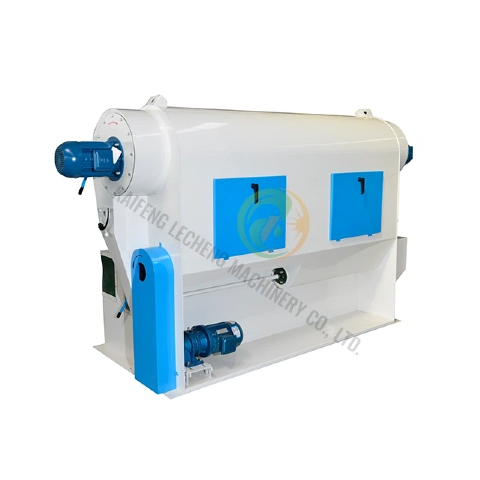
This is also where modern equipment shows its value. A machine such as an aspirator helps create cleaner feed material for the rest of the process. Kaifeng Lecheng Machinery offers cleaning equipment that supports this front-end stage, helping seed processors improve consistency before treatment begins.
Grading and removing weak or off-spec seed
After cleaning, the seed lot should be graded to improve uniformity. Seeds that are undersized, damaged, or off-spec are removed so the remaining material is more consistent in size and quality. This is important because a more uniform seed lot receives treatment more evenly and behaves more consistently during handling.
Grading also helps improve the commercial value of the seed lot. Instead of treating a mixed batch with uneven performance potential, the processor works with seed that has already been standardized. That makes the next stages more efficient and the final result more reliable.
Soaking, priming, or dormancy handling when needed
Not every rice seed lot is in the same condition before sowing. Some lots may require conditioning, such as soaking, priming, or basic dormancy handling, depending on the seed condition and planting method. This step is not always used in exactly the same way, but its purpose is simple: prepare the seed for better readiness before treatment and sowing.
Conditioning is valuable when the seed needs more than basic cleaning and grading to reach a suitable working state. It helps the process stay practical and seed-specific rather than applying the same routine to every lot without considering its actual condition.
Applying the treatment evenly across the seed lot
The treatment stage is where the seed receives the protective or performance-supporting material, but the goal is not just to add more product. The goal is to apply it evenly. Uniform coverage is what makes the process useful. If one part of the lot receives too much and another part too little, the final result becomes less dependable.
That is why the earlier steps matter so much. Cleaned, graded, and properly prepared seed is easier to treat well. Whether the approach is chemical, biological, or a combination, the value lies in controlled application and a seed lot that remains easy to handle afterward.
Stage | Main goal | Typical action | Why it matters |
Pre-cleaning | Remove dust and debris | Aspiration and cleaning | Improves treatment consistency |
Grading | Improve lot uniformity | Screening and separation | Supports even application |
Conditioning | Prepare seed for treatment | Soaking, priming, or dormancy handling | Improves readiness |
Treatment application | Protect or enhance seed | Coating, dressing, or bio-treatment | Supports early performance |
Drying back | Make seed safe to handle | Controlled drying | Prevents clumping and handling issues |
Packing | Keep seed organized | Bagging and labeling | Maintains lot integrity |
What happens after treatment matters just as much
Drying back and stabilizing the treated seed
After treatment, the seed should not move straight into storage or sowing without control. It needs time and proper conditions to stabilize. Drying back helps the treated seed return to a condition that is easier to handle, bag, and plant. Without this step, the lot may become sticky, clumped, or inconvenient in later operations.
This stage protects the work already done. Good treatment coverage is only useful if the seed remains practical for real use. For rice seed processors, proper drying back is part of a complete treatment process, not just an optional finishing step.
Handling, bagging, and keeping treated seed lots consistent
Once the seed is stabilized, careful handling becomes essential. Different seed lots should remain clearly separated, properly labeled, and consistently bagged. This reduces confusion later and helps maintain lot integrity from the treatment line to delivery or sowing.
For commercial users, organized handling is part of product quality. Clean and well-managed packing makes the seed easier to store, easier to identify, and more professional in presentation. It is also the final point where process consistency becomes visible.
How the process changes with the planting situation
Direct seeding and flooded-field considerations
In direct seeding systems, seed performance is tested very early. If the seed lot is weak or inconsistent, problems appear quickly in the field. Under flooded or otherwise demanding conditions, early establishment becomes even more important. In these situations, the value of proper seed preparation becomes more obvious.
That is why rice seed treatment should always match the planting reality. The seed does not need a different logic, but it may need stricter control over uniformity, readiness, and handling depending on field conditions.
Nursery preparation and transplanting systems
In nursery-based systems, the process still follows the same main steps, but the handling priorities can differ. The seed still needs to be clean, graded, treated, and organized well, yet the final goal is smooth nursery performance rather than direct field placement.
This shows that the process of seed treatment stays focused even when the planting system changes. The same core logic remains useful: clean first, standardize the lot, prepare it well, treat it evenly, and keep it stable afterward.
Why integrated seed processing gives better consistency
Connecting cleaning, grading, treatment, and bagging in one flow
When seed preparation is split across separate machines and disconnected stages, consistency is harder to maintain. Extra handling increases variation, slows the workflow, and makes treatment results less stable. An integrated seed processing line solves this by linking the major steps together into one controlled flow.
This is where Kaifeng Lecheng Machinery’s product value becomes clear. When cleaning, aspiration, grading, treatment, and bagging are better connected, the seed lot moves more smoothly through the process and the final result becomes easier to control.
Why consistency is the real value for commercial seed operations
For commercial users, consistency is the real benefit of a modern seed processing line. They do not simply need treated seed in name. They need a seed lot that has been cleaned well, graded well, treated evenly, dried correctly, and packed clearly.
That is what makes the final product easier to store, deliver, and use. A more integrated workflow also supports repeatability from one batch to the next, which is exactly what growing seed operations need when quality standards become higher.
Conclusion
The real process behind seed preparation is much more than a simple coating step. Seed treatment of rice works best when it starts with clean, uniform seed, follows with proper conditioning and even application, and ends with correct drying and organized handling. This full workflow gives the seed a better chance to perform consistently in real planting conditions. For operations that need smoother processing and more reliable results, a well-designed Seed Processing Plant can connect these stages into one practical system. Kaifeng Lecheng Machinery Co., Ltd. supplies seed processing equipment for businesses that want better control, better consistency, and better readiness before sowing. Contact us to learn more about the right solution for your rice seed processing needs.
FAQ
What is the first step in the rice seed treatment process?
The first step is pre-cleaning. Dust, husk fragments, and light impurities should be removed before grading or treatment so the seed lot is easier to handle and more suitable for even treatment.
Why is grading important before treating rice seed?
Grading removes weak, damaged, and off-spec seed to make the lot more uniform. This supports more even treatment coverage and more consistent performance after sowing.
Does treated rice seed need drying after application?
Yes. Drying back helps stabilize the treated seed so it does not clump and remains easy to bag, store, and plant.
Why does an integrated seed processing line improve consistency?
An integrated line connects cleaning, grading, treatment, drying, and bagging in one flow. This reduces unnecessary handling and helps maintain more stable seed quality from batch to batch.


