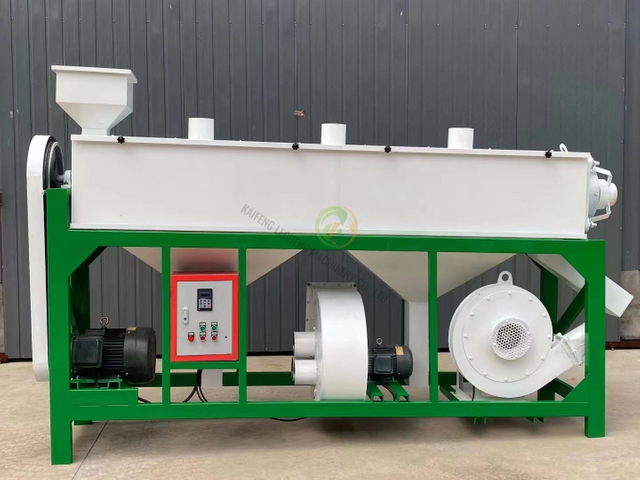
From mining raw ores to ensuring food safety, one technology silently safeguards product purity and process efficiency: the magnetic separator. But what exactly is magnetic separation, and why has it become indispensable across industries? This guide breaks down the definition of magnetic separation, how magnetic separators work, their types, applications, advantages, and the key factors to consider when choosing the right solution. Whether you’re in recycling, manufacturing, or food processing, understanding what is magnetic separation will help you unlock cleaner products, safer operations, and higher profitability.
Table of Contents
What is a Magnetic Separator?
How Does a Magnetic Separator Work?
Types of Magnetic Separators
Advantages and Disadvantages of Magnetic Separators
Applications of Magnetic Separators
Magnetic Separator vs Other Separation Methods
Factors to Consider When Choosing a Magnetic Separator
Maintenance and Best Practices for Magnetic Separators
Future Trends in Magnetic Separation
FAQs About Magnetic Separators
Enhancing Industrial Operations Through Magnetic Separation
Why Choose K&F Lecheng Machinery
What is a Magnetic Separator?
Industrial operations across mining, recycling, food processing, and manufacturing depend on precise material separation to maintain quality, safety, and efficiency. Among the various separation technologies available, magnetic separators stand out as one of the most reliable and cost-effective solutions for removing unwanted ferrous materials from product streams.
A magnetic separator is a specialized device that uses magnetic forces to segregate magnetic substances from non-magnetic ones. By leveraging the magnetic properties of different materials, these systems can attract and capture ferrous contaminants from mixtures with remarkable precision. The technology has become indispensable in modern industry, offering separation efficiency rates exceeding 90% while processing large volumes of material continuously.
Understanding magnetic separation begins with recognizing the fundamental differences between material types. Ferrous materials contain iron and are strongly attracted to magnets, while non-ferrous materials like aluminum and copper are not magnetic but can still interact with magnetic fields under specific conditions. Non-magnetic materials, including most plastics and ceramics, show no response to magnetic fields and pass through separators unchanged.
This comprehensive guide explores the definition of magnetic separation, examines how different types of magnetic separators work, and reveals why these systems have become essential across multiple industries for ensuring product purity, equipment protection, and operational safety.
How Does a Magnetic Separator Work?
The principle behind magnetic separation relies on the differences in magnetic properties of materials, which experience varying forces within the magnetic field of the separator. When materials pass through or near a magnetic field, their magnetic characteristics determine whether they will be attracted, repelled, or remain unaffected.
Materials can be classified into three main magnetic categories based on their response to magnetic fields.
| Category | Magnetic Response | Typical Examples |
|---|
| Ferromagnetic | Strongly attracted; retain magnetism | Iron, nickel, cobalt, magnetite |
| Paramagnetic | Weakly attracted; no retained magnetism | Manganese, chromium, hematite |
| Diamagnetic | Very weakly repelled; negligible response | Wood, plastics, glass, food |
Ferromagnetic materials like iron, nickel, and cobalt demonstrate strong magnetism and are easily attracted to magnetic separators. These materials maintain their magnetic properties even after the external magnetic field is removed, making them ideal candidates for magnetic separation.
Paramagnetic materials are weakly attracted to magnetic fields. While this attraction is much less pronounced than ferromagnetic materials, specialized high-gradient magnetic separators can effectively capture these substances. Common paramagnetic materials include manganese, chromium, and certain iron-containing minerals.
Diamagnetic materials are actually repelled by magnetic fields, though this repulsion is extremely weak. Most organic materials, including wood, plastics, and many food products, fall into this category. The repulsion effect is so minimal that diamagnetic materials typically pass through magnetic separators without significant deflection.
The magnetic field strength, gradient, and configuration determine the separator's effectiveness. Stronger magnetic fields can capture smaller ferrous particles and process materials at higher speeds, while specialized field configurations enable the separation of different magnetic material types in a single operation.
Types of Magnetic Separators
Modern industrial applications require various magnetic separator designs to handle different materials, processing conditions, and separation requirements. Each type offers unique advantages for specific applications and operating environments.
| Type | Core Principle | Typical Uses |
|---|
| Drum Separator | Rotating drum attracts/retains ferrous | Minerals, coal, recycling |
| Suspension Magnet | Magnet above belt lifts tramp iron | Mining, bulk handling, recycling |
| Conveyor Belt Magnet | Inline/crossbelt magnet removes ferrous | In-line transport contamination control |
| Eddy Current Separator | Rotating field repels non-ferrous (Al, Cu) | Recycling of non-ferrous metals |
| High-Gradient (HGMS) | Matrix creates intense gradients for weak mags | Weakly magnetic minerals, fine removal |
| Grate / Plate Separator | Magnetic bars/plates capture as flow passes | Food, pharma, powders & granules |
Drum Magnetic Separator
Drum magnetic separators consist of a rotating drum containing magnetic elements, typically rare earth magnets, that attract and separate ferrous materials from non-ferrous ones. As the drum rotates, magnetic materials adhere to the drum surface and are carried away from the non-magnetic material stream.
These separators excel in mineral processing, coal preparation, and recycling applications where continuous, high-volume processing is required. The rotating action provides self-cleaning capabilities, reducing maintenance requirements while maintaining consistent separation performance. Drum separators can handle both dry and wet materials, making them versatile solutions for various processing conditions.
Suspension Magnetic Separator
Suspension magnetic separators are designed to suspend over conveyor belts or chutes to remove ferrous contaminants from flowing materials. The suspended magnetic field attracts and lifts ferrous materials out of the product stream without disrupting the overall material flow.
These systems are widely used in mining, recycling, and bulk handling industries where materials are transported via conveyor systems. The suspension design allows for easy installation above existing conveyor lines without requiring significant modifications to processing equipment. Many suspension separators feature self-cleaning belt systems that automatically discharge captured ferrous materials.
Conveyor Belt Magnetic Separator
Conveyor belt magnetic separators are installed directly onto conveyor systems to remove ferrous contaminants continuously as materials are transported. The magnetic field attracts ferrous materials while the conveyor continues moving, ensuring uninterrupted processing flow.
Available in both inline and crossbelt configurations, these separators can be integrated at various points in processing lines. Inline designs position the magnetic field parallel to material flow, while crossbelt configurations place the magnetic field perpendicular to the conveyor direction. The choice depends on material characteristics, conveyor speed, and separation requirements.
Eddy Current Separator
Eddy current separators use rotating magnetic fields to generate eddy currents in conductive materials, creating repulsion forces that deflect non-ferrous metals away from the separator. This technology is particularly effective for separating aluminum and copper from non-metallic materials in recycling applications.
The separator consists of a high-speed rotating magnetic rotor that creates rapidly changing magnetic fields. When conductive materials pass over this field, induced eddy currents generate magnetic forces that repel the materials, causing them to follow different trajectories than non-conductive materials. This principle enables precise separation of valuable non-ferrous metals from waste streams.
High-Gradient Magnetic Separator
High-gradient magnetic separators utilize a matrix of magnetic wires or stainless steel wool to create intense magnetic field gradients. These systems can capture weakly magnetic materials that would pass through conventional magnetic separators.
The wire matrix or steel wool creates numerous high-gradient zones where magnetic forces are concentrated, enabling the recovery of paramagnetic minerals and fine ferrous particles. These separators are commonly used in mineral processing for recovering weakly magnetic minerals like ilmenite and chromite, as well as in applications requiring the removal of very fine ferrous contamination.
Grate and Plate Separators
Grate and plate separators consist of magnetic tubes or bars arranged in grid-like structures. Materials pass through gaps between the magnetic elements, and ferrous contaminants are captured on the magnet surfaces.
These separators are particularly effective for powders, grains, and granular materials in food processing and pharmaceutical applications. The grate design allows free-flowing materials to pass through while capturing ferrous particles of various sizes. Many grate separators feature easy-clean designs with removable magnetic elements for thorough sanitation.
Advantages and Disadvantages of Magnetic Separators
Advantages
Magnetic separators offer exceptional separation efficiency in removing ferrous contaminants from solids, liquids, and powders. With success rates exceeding 90%, these systems reliably remove unwanted magnetic materials while preserving product integrity.
High processing capacity allows magnetic separators to handle large volumes of material continuously. Unlike batch processing methods, magnetic separation operates as a continuous process, maintaining productivity while ensuring consistent separation quality. This capability makes magnetic separators ideal for high-throughput industrial applications.
The technology delivers high recovery rates of valuable materials by selectively capturing and concentrating magnetic particles or ferrous contaminants. In recycling applications, this translates to increased revenue from recovered metals, while in manufacturing, it means reduced material waste and improved product quality.
Environmental benefits include the elimination of chemical separation agents, making magnetic separation a clean, sustainable technology. The process requires no water or chemical additives, reducing environmental impact and disposal costs while maintaining separation effectiveness.
Low operating costs result from the simple mechanical design and minimal energy requirements. Once installed, magnetic separators require minimal ongoing operational expenses compared to other separation technologies that may require consumables or complex maintenance procedures.
Quick View — Advantages of Magnetic Separators
High Efficiency: Consistently removes >90% ferrous contaminants from solids, liquids, and powders.
Continuous Throughput: In-line, non-stop processing sustains high productivity and uniform quality.
High Recovery Rates: Maximizes value by concentrating magnetic particles; boosts recycling revenue and product quality.
Eco-Friendly: No chemicals or water needed—clean, sustainable separation with lower disposal impact.
Low Operating Cost: Simple mechanics and low energy use minimize ongoing expenses and maintenance.
Disadvantages
Frequent maintenance is required due to wear and tear of mechanical components, particularly in high-volume applications. Moving parts such as belts, pulleys, and bearings require regular inspection and replacement to maintain optimal performance.
Regular cleaning is necessary to remove accumulated debris, dirt, and captured ferrous materials. While some separators feature self-cleaning designs, manual cleaning may still be required to maintain maximum magnetic field effectiveness and prevent contamination buildup.
Limitations exist with non-magnetic or weakly magnetic materials that cannot be effectively separated using conventional magnetic methods. These materials may require alternative separation technologies or specialized high-gradient magnetic separators, which can increase system complexity and costs.
Applications of Magnetic Separators
Magnetic separators power critical separation tasks across industries—from upgrading ores and maximizing metal recovery to protecting food/pharma lines and safeguarding machinery. Below, we break down the key application areas—mining, recycling, food & pharma, manufacturing, and agriculture/biomass—highlighting the goals, typical separator choices, and benefits each sector gains (higher purity, reduced downtime, and better yield).
Mining and Mineral Processing
The mining industry relies heavily on magnetic separators for extracting valuable magnetic minerals like magnetite, hematite, and ilmenite from ore deposits. These separators enable ore concentration and beneficiation processes that increase the value of extracted materials while reducing processing costs.
Magnetic separation is particularly effective in iron ore processing, where magnetite can be separated from gangue minerals using drum or high-gradient magnetic separators. The technology also plays a crucial role in rare earth mineral processing, where specific magnetic properties enable the separation of valuable elements.
Recycling Industry
Recycling operations use magnetic separators to segregate ferrous and non-ferrous metals from municipal solid waste (MSW) and scrap materials. This separation enables the recovery of valuable metals while improving the purity of other recyclable materials like plastics and paper.
Eddy current separators are particularly valuable in recycling applications, where they separate aluminum cans and copper components from mixed waste streams. The combination of magnetic and eddy current separation creates comprehensive metal recovery systems that maximize material value.
Magnetic Separators in Food Processing
Food processing and pharmaceutical manufacturing require magnetic separators to ensure product safety by removing iron particles that could contaminate products or damage processing equipment. These applications demand separators that meet strict hygiene and safety standards.
Grate and plate separators are commonly used in food applications because their design allows for easy cleaning and sanitization. The separators must comply with FDA regulations and food safety standards while maintaining separation effectiveness throughout processing operations.
Manufacturing and Industrial Use
Manufacturing industries use magnetic separators to protect equipment from tramp iron that could cause damage or wear. By removing ferrous contaminants before materials enter processing equipment, manufacturers reduce maintenance costs and improve product quality.
Industries processing plastics, chemicals, and ceramics rely on magnetic separators to remove iron contamination that could affect product appearance, performance, or safety. The technology is particularly important in automotive and aerospace applications where material purity is critical.
Agriculture and Biomass
Agricultural applications include removing ferrous contaminants from grains, feed, and biomass materials. These contaminants can originate from harvesting equipment, transportation systems, or storage facilities and must be removed to ensure product quality and equipment protection.
Wood processing operations use magnetic separators to remove nails, screws, and other ferrous objects before materials enter chippers, grinders, or other processing equipment. This application prevents equipment damage while improving the quality of processed wood products.
Magnetic Separator vs Other Separation Methods
Compared to sieving, flotation, and gravity separation methods, magnetic separation offers unique advantages in terms of selectivity, processing speed, and environmental impact. Unlike sieving, which separates based on particle size, magnetic separation can target specific materials regardless of their physical dimensions.
Flotation processes require chemical reagents and water, making them more complex and environmentally challenging than magnetic separation. Gravity separation depends on density differences and may not be effective for materials with similar densities but different magnetic properties.
Magnetic separation excels in applications where target materials have distinct magnetic characteristics, offering precision that other methods cannot match. The technology's ability to operate continuously without chemical additives makes it particularly attractive for sustainable processing operations.
Factors to Consider When Choosing a Magnetic Separator
Type of Material Processed
The physical characteristics of processed materials significantly influence separator selection. Dry bulk materials, powders, liquids, and slurries each require different magnetic separator designs and configurations to achieve optimal separation performance.
Material flow rates, particle sizes, and contamination levels must be considered when selecting separator capacity and magnetic field strength. Abrasive materials may require more robust construction, while food-grade applications need separators designed for easy cleaning and sanitization.
Industry Requirements
Different industries have specific regulatory and performance requirements that influence separator selection. Food processing requires FDA-compliant materials and designs, while mining operations may prioritize high-throughput capacity over easy cleaning features.
Safety standards, environmental regulations, and quality certifications must be considered when selecting magnetic separators. Some applications may require explosion-proof designs or specialized materials to meet industry-specific requirements.
Separator Type and Installation Point
The location of separator installation within the processing line affects performance and maintenance requirements. Raw material intake points may require robust separators capable of handling high contamination levels, while end-line applications may focus on final product protection.
Mid-production installation points offer opportunities to remove contamination before it affects downstream equipment, potentially reducing overall processing costs and improving product quality throughout the manufacturing process.
Here’s a cleaner, author-friendly checklist:
1) Material & Flow
Medium: dry bulk / powder / liquid / slurry
Flow rate and particle size (target capture size)
Contaminant type & load: tramp iron vs. fines
Special traits: abrasive, sticky, hygienic/food-grade
2) Compliance
Required standards: FDA/EC, HACCP/GMP, ATEX
Cleanability: easy-clean/CIP, smooth finishes, no dead zones
Documentation: traceability, routine verification
3) Placement & Type
Intake (heavy contamination): overband/crossbelt, drum
Mid-line (protect downstream): staged removal
End-of-line (final purity): grate/plate/bullet
Fit to layout: free-fall, in-pipe, on-belt; space constraints
4) Performance
Magnetic strength (Gauss/Tesla) and field gradient
Target efficiency/recovery (e.g., >90%) and capture size
Dry vs. wet duty; need HGMS for weakly magnetic materials
5) Cost & Service
Capex vs. Opex: energy, spares, cleaning time
Cleaning method: self-clean vs. manual
Vendor support: testing, lead times, scalability
Maintenance and Best Practices for Magnetic Separators
Regular cleaning intervals and proper cleaning methods are essential for maintaining separator performance. The frequency of cleaning depends on contamination levels, material characteristics, and operating conditions. Some applications may require daily cleaning, while others can operate for weeks between maintenance cycles.
Monitoring magnetic field strength ensures consistent separation performance over time. Permanent magnets can lose strength due to temperature exposure, physical damage, or age, requiring periodic testing and potential replacement to maintain separation effectiveness.
Preventing contamination buildup involves proper system design, adequate cleaning procedures, and regular inspection of magnetic surfaces. Accumulated materials can reduce magnetic field effectiveness and create areas where contamination can bypass the separation process.
Equipment lifespan can be extended through proper maintenance practices, including regular lubrication of moving parts, replacement of worn components, and protection from environmental factors that could accelerate wear or corrosion.
Future Trends in Magnetic Separation
Development of stronger rare-earth magnets continues to improve separation performance while reducing equipment size and energy consumption. Advanced magnet materials enable more compact separator designs with enhanced separation capabilities for challenging applications.
Automation and sensor-integrated separation systems are transforming magnetic separation technology. Smart separators can monitor performance, adjust operating parameters, and provide predictive maintenance alerts, reducing operational costs while improving separation consistency.
Sustainable and energy-efficient designs focus on reducing environmental impact while maintaining separation performance. These developments include improved magnet recycling programs, energy recovery systems, and designs that minimize material waste during processing.
FAQs About Magnetic Separators
What is the purpose of a magnetic separator?
The primary purpose of a magnetic separator is to remove ferrous contaminants from material streams to protect equipment, improve product quality, and recover valuable materials. These devices enhance safety, reduce maintenance costs, and ensure product purity across various industries.
What industries use magnetic separators the most?
Mining and mineral processing, recycling, food processing, and manufacturing industries are the largest users of magnetic separators. Each industry leverages the technology for different purposes, from ore beneficiation to product safety and equipment protection.
Can magnetic separators remove stainless steel?
Most stainless steel grades are weakly magnetic or non-magnetic, making them difficult to remove with standard magnetic separators. However, some stainless steel types contain ferromagnetic phases that can be captured by high-intensity magnetic separators.
What is the difference between drum and overband separators?
Drum separators use rotating magnetic drums to continuously separate materials, while overband (suspension) separators use stationary magnetic fields suspended above conveyor belts. Drum separators typically handle higher volumes, while overband separators are easier to install above existing conveyor systems.
How do I know which type of magnetic separator is right for my business?
Selecting the right magnetic separator depends on material characteristics, processing volumes, contamination levels, and industry requirements. Consider factors such as particle size, flow rates, installation constraints, and maintenance capabilities when choosing a separator type.
Enhancing Industrial Operations Through Magnetic Separation
Magnetic separators represent a cornerstone technology for modern industrial operations, offering efficient, cost-effective solutions for material separation challenges across diverse applications. From protecting valuable processing equipment to ensuring product safety and recovering valuable materials, these systems deliver measurable benefits that improve operational efficiency and profitability.
The technology's versatility enables applications ranging from high-volume mining operations to precision food processing, demonstrating the adaptability of magnetic separation principles to various industrial needs. As manufacturing processes become more automated and quality requirements more stringent, magnetic separators provide the reliability and consistency essential for competitive operations.
Environmental sustainability continues to drive adoption of magnetic separation technology, as companies seek chemical-free processing solutions that reduce environmental impact while maintaining performance standards. The technology's ability to operate continuously without consumables or waste generation aligns with modern sustainability goals.
Why Choose K&F Lecheng Machinery
K&F Lecheng Machinery brings decades of expertise in magnetic separation solutions, providing comprehensive product lines that address diverse industrial requirements. Our specialization includes overband separators, drum separators, grate and plate systems, and custom magnetic separation solutions engineered for specific applications.
Our product portfolio encompasses magnetic bins and specialized magnetic separators designed to meet the exacting requirements of modern industrial operations. Each system is engineered for reliability, efficiency, and ease of maintenance, ensuring long-term value for our customers.
For engineering support, tailored solutions, and purchasing guidance, contact K&F Lecheng Machinery at +8615137822919 or +86-371-2386003. Our technical team is ready to help you select the optimal magnetic separation solution for your specific application requirements.
Visit our Magnetic Separator Solutions page to explore our complete product range and discover how magnetic separation technology can enhance your operations while reducing costs and improving product quality.