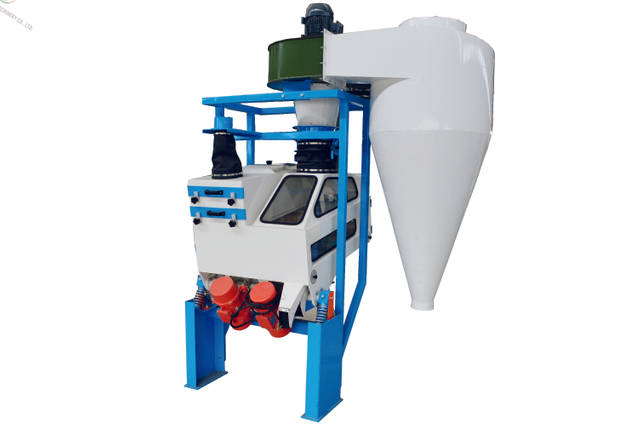
Seed producers face a constant battle during every planting season. You must improve plantability, boost germination rates, and ensure robust crop protection. Achieving all these goals without damaging fragile genetic material remains your primary operational challenge. Today, modern agricultural facilities rely heavily on seed enhancement technology to meet these exact demands. While both pelleting and coating fall under this broad category, they serve fundamentally different agronomic and biological purposes. Coating applies a thin layer of protection directly to the surface. Pelleting entirely transforms the physical shape of the unit. This article provides a clear technical framework for choosing between these two distinct processing methods. We will explore how your specific crop requirements dictate the exact machinery you must procure. By understanding the mechanical realities of each method, you can make an informed decision and optimize your production line.
Key Takeaways
Purpose: Coating applies a thin layer of active ingredients or colorants without altering the seed's shape; pelleting completely changes the seed's size and shape to create uniform, spherical units.
Crop Application: Coating is predominantly used for high-volume, broad-acre row crops (corn, soy), whereas vegetable seed pelleting is standard for small, irregularly shaped seeds (carrots, lettuce, onions).
Equipment Distinction: A seed coating machine typically utilizes a high-speed rotor/stator system for rapid throughput, while a seed pelleting machine (or seed pelletizer) relies on specialized rotary pans or drums to gradually build up material layers.
Implementation Bottleneck: Pelleting requires significantly more complex drying infrastructure and precise proprietary binder recipes compared to standard film coating.
Core Differences in Seed Enhancement Technology
The Mechanics of Seed Coating
Seed coating involves the precise application of liquids, flowables, or thin polymer films. Operators typically mix these liquid formulations in specialized tanks before pumping them into the treatment chamber. The primary objective is the targeted delivery of fungicides, insecticides, inoculants, and biological agents. By placing these active ingredients directly on the seed surface, you maximize early-season crop protection.
The physical impact on the seed remains minimal. Coating usually increases the total seed weight by only 1% to 5%. This minimal weight addition ensures the original seed shape remains unchanged. A corn kernel still looks and handles like a corn kernel after processing. This minimal physical alteration allows farmers to use standard planting equipment. The coating simply smooths minor surface imperfections and provides a visually distinct color.
Common Mistake: Applying too much liquid polymer can cause seeds to bridge or stick together in the hopper. Always calibrate your liquid dosing systems according to the manufacturer's viscosity guidelines.
The Mechanics of Seed Pelleting
Seed pelleting operates on an entirely different mechanical principle. This process encases the seed in solid, inert materials such as specialized clays or diatomaceous earth. Operators introduce a liquid binder to adhere these dry powders layer by layer. The primary objective is creating uniform size and weight. This uniformity allows for exact mechanical singulation in precision pneumatic planters.
The physical impact here is substantial. Pelleting can easily increase seed weight by 1,000% to over 4,000%. The process completely masks the original seed shape, turning jagged or flat seeds into perfect spheres. This massive weight increase requires robust handling protocols. The resulting spherical unit rolls smoothly through precision planting mechanisms, eliminating planting skips or double drops.
Feature | Seed Coating | Seed Pelleting |
Weight Increase | 1% to 5% | 1,000% to 4,000%+ |
Shape Alteration | None (Retains original geometry) | Total (Creates uniform spheres) |
Primary Materials | Polymers, liquid flowables, colorants | Clays, powders, liquid binders |
Drying Requirement | Minimal (often dries in-machine) | Substantial (requires dedicated dryers) |
Matching the Process to Crop Types and Success Criteria
When to Choose Seed Coating
Seed coating represents the ideal solution for agronomic crops possessing naturally uniform seeds. Corn, soybeans, wheat, and cotton naturally feed well through standard planting equipment. You do not need to change their physical geometry to plant them effectively. Instead, your goal is applying chemical protection at a massive scale.
The success criteria for these operations prioritize raw speed and regulatory compliance. High-throughput capacity stands as the ultimate metric for commercial row-crop facilities. Operators must achieve uniform chemical coverage across millions of seeds per hour. Furthermore, you must achieve zero dust-off to meet strict environmental compliance standards. Airborne pesticide dust poses severe ecological risks. Finally, keeping the cost-per-pound extremely low remains essential for maintaining profitability in broad-acre agriculture.
Best Practice: Implement automated flow meters on all liquid lines. Consistent liquid delivery ensures you hit your target cost-per-pound metrics perfectly.
When to Choose Vegetable Seed Pelleting
You should select vegetable seed pelleting when handling small, multi-germ, or irregularly shaped seeds. Carrots, tomatoes, tobacco, and floral seeds pose massive challenges for mechanical planters. Their jagged edges and microscopic sizes cause them to jam in seed tubes or fall in clusters.
The success criteria here focus entirely on precision rather than raw volume. You must achieve perfect sphericity. This roundness allows for precise single-seed singulation in the field. Every single drop must result in exactly one plant emerging. Additionally, you must engineer a controlled breakdown of the pellet structure upon hydration. If the binder remains too hard after absorbing soil moisture, the emerging sprout cannot break through. We call this critical failure "split-pellet germination failure." The pellet must split seamlessly the moment adequate moisture penetrates the outer shell.
Evaluating Hardware: Seed Pelleting Machine vs. Seed Coating Machine
Specifications for a Seed Coating Machine
Modern coating relies on specific mechanical frameworks engineered for speed. A standard seed coating machine typically utilizes continuous flow or batch rotor/stator systems. These systems spin the seeds rapidly while atomizing the liquid treatment into a fine mist.
When evaluating these machines, you must prioritize dosing accuracy. Advanced PLC (Programmable Logic Controller) systems are mandatory. The PLC coordinates the exact flow of seed and liquid, ensuring perfect chemical distribution. You must also evaluate the atomization technology. High-quality spinning discs break the liquid down into micro-droplets, preventing uneven application. Finally, gentle handling is crucial. The high-speed rotor must move the seed mass quickly to prevent mechanical damage or cracked seed coats. Throughput expectations for this equipment run exceptionally high, often measuring in several tons per hour.
Specifications for a Seed Pelleting Machine
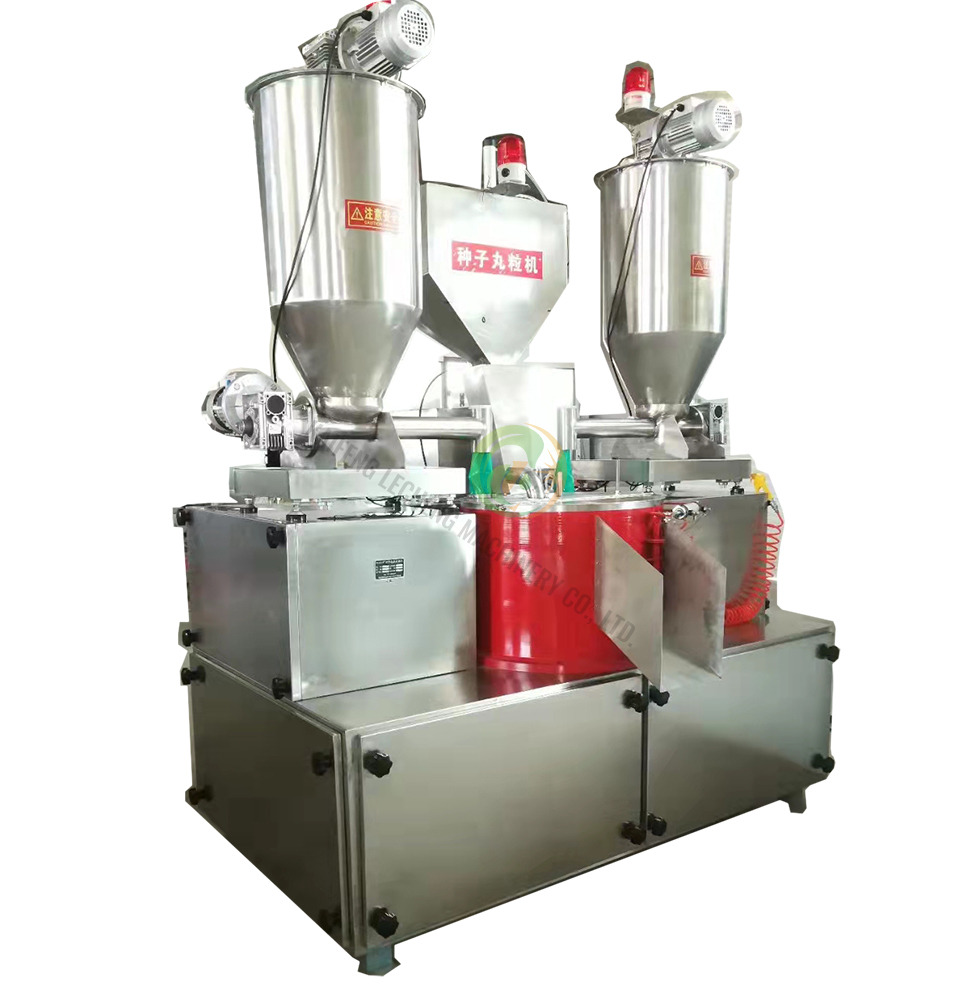
Building a sphere requires a slower, more deliberate mechanical approach. A seed pelleting machine utilizes a rotary pan, a tumbling drum, or a specialized centrifuge design. The operator introduces dry powder and liquid binder in alternating sequences as the seeds roll continuously.
Key features to evaluate include variable pan speed capabilities. As the pellets grow heavier, you must adjust the rotational speed to maintain the correct tumbling action. Precise spray-nozzle positioning for liquid binders is equally vital. If the binder hits the empty pan instead of the rolling seed mass, you will create solid clumps of clay. Automated powder dosing systems represent another critical feature. They distribute the dry materials evenly across the cascading seeds. Throughput expectations here are significantly lower but focus on high-value output. Production typically ranges from a few kilograms to several hundreds of kilograms per batch.
Implementation Realities and Operational Risks
Material and Recipe Complexity
Pelleting demands exact formulations of dry powders and liquid binders. You cannot simply guess the ratios. Poor recipes lead directly to catastrophic product failures. If the binder is too weak, the pellets crumble into dust during transport. If the binder is too strong, the pellets fail to split during planting, trapping the seedling inside. Developing these proprietary recipes requires extensive laboratory testing. Coating, conversely, utilizes pre-formulated polymers provided directly by chemical manufacturers. You simply follow the label instructions.
Drying Infrastructure
Moisture management dictates your facility design. Film coating applies very little liquid. The seeds typically dry almost instantly inside the mixing chamber due to the air volume. Pelleting introduces substantial moisture to build the heavy clay layers. Dedicated drying infrastructure becomes a mandatory investment. You must install fluidized bed dryers or forced-air drying cabinets to remove this deep moisture safely. If you pack wet pellets, they will mold and die within days.
Operator Expertise
Running a specialized seed pelletizer is an art form. The operator must possess significant skill to monitor the physical growth of the pellet batch. They must visually recognize when to add more binder and when to add more powder. A primary operational risk involves creating "multiples." This occurs when two or more seeds stick together and become bound inside a single oversized pellet. Coating systems generally run autonomously once the PLC receives the recipe parameters, requiring far less manual intervention.
Compliance and Quality Control
Regulatory bodies aggressively monitor seed treatment operations. Both pelleting and coating processes must pass stringent dust-off tests. The Heubach test remains the global industry standard for measuring airborne particulate matter. If your finished product sheds chemical dust during handling, you risk severe regulatory fines. Environmental regulations regarding pesticide drift demand perfect adhesion. Quality control teams must constantly sample batches to verify zero dust-off compliance.
Routine Checks: Schedule Heubach testing on every new seed variety processed.
Moisture Testing: Verify final moisture content before sealing bulk bags to prevent premature germination loss.
Drop Testing: Perform mechanical drop tests to ensure pellet structural integrity mimics real-world transport conditions.
Shortlisting Your Seed Treatment Equipment
Procuring the right hardware determines the financial and agronomic success of your operation. Following a structured evaluation process minimizes your deployment risks. Consider these exact steps when evaluating new seed treatment equipment.
Determine Baseline Capacity: Calculate your required peak-season throughput meticulously. Do not buy a high-volume continuous coater for a low-volume specialty operation. Conversely, do not rely on a small pan pelletizer for broad-acre seed volumes. Match the machine's stated capacity to your busiest operational month.
Vendor Testing Requirements: Never purchase industrial hardware based solely on a brochure. You must run a test batch of your specific seed variety. Bring your exact chemical or powder formulation to the manufacturer's facility. Run these tests on their pilot equipment to verify the machine can handle your specific agricultural inputs.
Integration Capabilities: Your new machine cannot operate in a vacuum. Ensure the hardware integrates seamlessly with your existing pre-cleaning, sorting, and packaging lines. Look for standardized conveyor heights and compatible PLC software protocols. An isolated machine creates massive workflow bottlenecks.
Evaluate Post-Sale Support: Hardware delivery represents only the first step. Look for equipment vendors who provide comprehensive recipe development assistance. They should offer on-site operator training to bring your staff up to speed quickly. A vendor who disappears after delivery leaves you entirely vulnerable to production delays.
Common Mistake: Ignoring dust extraction integration. Always ensure your shortlisted equipment includes built-in aspiration ports to connect to your central dust collection facility.
Conclusion
Determining which process is "better" depends entirely on your specific crop type and your ultimate agronomic goals. Coating provides an unmatched solution for high-speed chemical delivery on broad-acre crops. It keeps operations fast, efficient, and cost-effective. Pelleting solves the complex geometry problems of high-value vegetable and floral seeds. It enables precision mechanical planting that would otherwise be impossible.
Your equipment procurement strategy should always be driven by strict throughput requirements, formulation complexity, and available operator expertise. Do not force a coating machine to do a pelletizer's job. To guarantee success, we strongly recommend scheduling a consultation with an established equipment manufacturer. They can map out a custom processing line tailored exactly to your specific crop profiles and operational constraints. Take action by auditing your current planting failures to see which technology will provide the immediate solution.
FAQ
A: Generally no. While rotary pans can apply basic film coats, they are inefficient for high-volume coating. Conversely, a rotor/stator batch coater cannot build the heavy material layers required for true pelleting.
Q: What is the typical ROI timeframe for a commercial seed pelletizer?
A: Depends on seed value. For high-value vegetable seeds, ROI can be achieved in 1–2 seasons due to the premium charged for pelleted seed. For lower-value crops, the ROI timeline extends significantly.
Q: Do pelleted seeds have a shorter shelf life than coated seeds?
A: If dried correctly to optimal moisture levels, pelleted seeds can store well. However, residual moisture from improper drying is the leading cause of premature germination loss in pelleted seeds.
Q: Are there organic-compliant materials for seed pelleting and coating?
A: Yes. Many vendors offer OMRI-listed binders, clays, and natural polymer coatings to comply with organic agricultural standards.