Upgrading seed processing capabilities forces a tough choice for modern agricultural operations. You must weigh geographic flexibility against raw, unyielding throughput. Choosing the wrong architecture carries heavy consequences for your bottom line. Stranded capital plagues businesses heavily invested in underutilized fixed lines. Conversely, undersized mobile units create brutal operational bottlenecks during peak harvest windows. The stakes remain high when processing margins shrink.
This article delivers a balanced, criteria-driven comparison of both distinct approaches. We help agribusinesses, seed producers, and custom cleaning startups navigate this exact decision. You will learn how to choose the right system based on verifiable ROI. We evaluate operational footprints, logistical realities, and rigid capacity requirements. Our goal is absolute clarity to safeguard your heavy equipment investment. By examining the true operational baselines, you can align your machinery perfectly alongside your broader business strategy.
Key Takeaways
- Mobile combine seed cleaners prioritize field-side processing and multi-site contracting, reducing transport logistics but capping maximum hourly throughput.
- Fixed cleaning lines deliver superior volume and multi-stage precision but require significant upfront infrastructure, 3-phase power, and dedicated facility space.
- The crossover point for ROI typically depends on whether your business model relies on centralizing grain or taking the service directly to distributed farm sites.
- Implementation success hinges on practical realities: PTO/generator constraints for mobile units vs. facility permitting for fixed lines.
Defining the Operational Baselines: Field vs. Facility Processing
The agricultural processing industry is witnessing a massive core shift. We see operators moving away from strictly centralized processing models. They pivot toward decentralized field grain cleaning. Central hubs often struggle under immense harvest pressure. Trucks wait in long lines at the scale. Mobile processors relieve this logistical strain effectively. You process grain directly at the silo or farm bin.
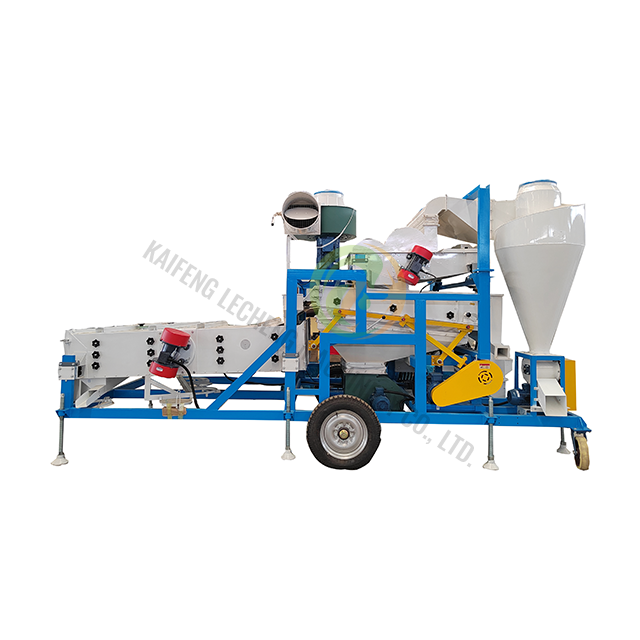
We define a mobile unit as a self-contained processing chassis. You pull it behind a heavy-duty pickup truck or agricultural tractor. It works straight out of the field. Operators deploy it directly next to the harvest site. It requires minimal permanent infrastructure. You bring the plant to the crop.
Conversely, fixed cleaning lines anchor your entire operation geographically. We view them as permanent, bolted-down installations. They house multi-deck sorting systems inside massive dedicated facilities. Agribusinesses integrate them alongside automated bagging systems. Color sorters elevate purity standards within these heavily regulated walls. Large-scale conveyors handle massive bulk transfers effortlessly. You trade geographic freedom for stationary muscle. We see both architectures serving entirely distinct operational scales.
Evaluating the Mobile Combine Seed Cleaner: Agility and Limitations
The primary advantage lies in your go-to-market speed. You completely eliminate the need to transport dirty grain. Hauling rough material to a central hub burns expensive diesel fuel. A mobile combine seed cleaner solves this logistical nightmare. Startups find this specific model highly profitable. Custom cleaning businesses thrive by visiting widely scattered farm bins.
These units pack multiple complex stages onto one rigid frame. A single DOT-compliant chassis carries powerful aspiration systems. We also see dual screening decks and specialized gravity separators onboard. You literally haul a complete processing plant down the interstate highway.
Despite the brilliant agility, operators must face specific operational trade-offs:
- Throughput ceilings: A mobile seed cleaning machine processes fewer bushels per hour. Physical size simply limits your total screen surface area.
- Power sourcing: Operators rely heavily on tractor PTO drives. Onboard diesel generators provide a secondary alternative power source. Fluctuating voltage harms cleaning precision drastically.
- Maintenance environment: Road travel introduces severe, continuous vibration. Machinery faces harsh weather elements. Preventative maintenance requires strict daily greasing routines.
You must inspect bearings and belts continuously. Field conditions test the durability of every moving component. We recommend stocking spare screens inside the towing vehicle. Downtime in the field ruins client relationships fast.
Evaluating the Fixed Cleaning Line: Scalability and Precision
Fixed installations deliver truly unmatched processing volume. They handle massive harvest surges easily. You gain the unique ability to link highly specialized machinery together. Optical sorters demand stable, vibration-free indoor environments. Precision gravity tables cannot survive continuous road transport. We rely on stationary setups for these sensitive, high-tech components.
These lines require heavily tiered infrastructure. Hardwired three-phase electricity powers massive industrial motors smoothly. We install permanent dust collection systems overhead. Dedicated receiving pits swallow entire semi-truckloads rapidly. Bucket elevators lift grain dozens of feet vertically.
The operational realities of a fixed line present distinct hurdles:
- Capital intensity: You face incredibly steep upfront investments. Concrete foundation work requires careful civil engineering. Building permits add frustrating administrative delays. Complex installation demands specialized contractor teams.
- Logistical bottleneck: Farmers must haul all their grain directly to you. Off-site handling time reduces local harvest efficiency. Heavy transport costs eat into your raw profit margins.
- Rigidity: You bolt the entire steel workflow down permanently. Reconfiguring a fixed line costs tens of thousands of dollars. Adapting to entirely new crop flows proves exceptionally difficult.
Fixed lines dominate the commercial seed sector. They achieve 99.9% purity rates consistently. High-volume contracts require this level of dedicated stationary infrastructure. You cannot fake massive throughput.
The Buying Matrix: 5 Decision-Stage Evaluation Criteria
Evaluating both systems requires a rigid analytical framework. You must assess your operation honestly. Use the following five criteria to narrow your equipment shortlist.
1. Total Volume vs. Hourly Throughput Constraints
You must calculate your peak harvest demands accurately. Fixed lines devour high-volume surges effortlessly. They run continuously for weeks. Mobile units process material at a much more measured pace. You need significantly longer operational windows to match stationary throughput. We advise tracking your busiest historical harvest week. Use those exact numbers to establish baseline capacity needs.
2. Financial Modeling & ROI Timelines
Compare initial capital expenditures carefully. A stationary facility demands massive upfront funding. You pay for concrete, steel structures, and electrical panels. Conversely, a mobile grain cleaner offers a vastly lower entry cost. Factor in the transport savings mobile operators enjoy daily. You spend zero dollars hauling raw crop. However, fixed facilities maximize sheer labor efficiency. One single operator manages massive hourly tonnages through automated PLC controls. Your ROI timeline shifts dramatically based on these specific variables.
3. Crop Diversity and Changeover Times
Mobile units allow rapid physical screen adjustments. Operators perform faster changeovers right out in the field. Simplicity rules the mobile processing environment. You slide screens out easily. Fixed lines involve highly complex changeover protocols. You must purge massive bucket elevators thoroughly. Air plenums require meticulous vacuuming between sensitive seed varieties. Cross-contamination destroys certified seed batches. Still, stationary plants offer broader overall crop adaptability. You can route diverse grain types through specialized secondary processing legs.
4. Space, Infrastructure, and Permitting Requirements
Assess your available commercial real estate thoroughly. Fixed facilities demand massive square footage. You navigate complex local zoning laws. Environmental permits govern commercial dust emissions. Alternatively, mobile units bypass strict building codes entirely. However, you face strict highway transportation regulations instead. Assess the legal weight limits on local rural roads. You must tow heavy commercial equipment safely across county lines.
5. Final Seed Quality & Certification Standards
Strict quality standards dictate equipment choices. Can a mobile setup meet certified seed parameters? Yes, if you calibrate the screens meticulously. Does the crop demand intense multi-stage processing? Delicate seeds often require a highly controlled environment. Fixed facilities excel at removing identical-weight weed seeds. You achieve flawless purity using stationary optical technology.
Performance Capability Chart
| Evaluation Criteria | Mobile Architecture | Fixed Facility Line |
| Hourly Throughput | Low to Medium | Exceptionally High |
| Upfront CapEx | Moderate | Very High |
| Transport Costs | Eliminated (On-site processing) | High (Centralized hauling required) |
| Maximum Purity Ceiling | Excellent | Near Perfect (Optical integration) |
| Setup Agility | Minutes to Hours | Months (Construction phase) |
Implementation Risks and Rollout Lessons
Implementation failures stem directly from ignored operational realities. Buyers often underestimate the physical environment. We see identical mistakes across the agricultural sector globally.
Site preparation challenges mobile operators daily. You must secure perfectly level ground before operating. Operating a farm seed cleaner on an incline causes immediate trouble. Gravity separation fails entirely on sloped terrain. Uneven decks ruin screen efficiency. Product spills over the edges. We recommend carrying heavy-duty hydraulic leveling jacks. Bring thick wooden blocking mats for muddy farmyards.
Fixed lines require expensive enclosed dust extraction. Compliant air filtration protects indoor workers from respiratory harm. You must meet strict OSHA or equivalent local safety standards. In contrast, mobile units vent dust directly outside. You release particulates into the open air. Operators must strategize unit placement carefully. Always position the machine downwind from the tractor. You protect the operator and engine intake filters from choking.
Many buyers attempt a dangerous financial shortcut. We call this the scalability trap. They purchase a mobile unit as a cheap alternative to a fixed facility. They plan to process massive centralized volume through a small trailer. This breaks the machine rapidly. You trigger severe equipment depreciation. Bearings overheat. Screens tear. Operators face brutal burnout from endlessly long shifts. Buy stationary gear for centralized volume models. Reserve mobile gear for true distributed service routes.
Conclusion
Choosing between architectures requires an honest business assessment. You must align your machinery purchase strictly alongside your revenue model.
- Choose a mobile platform for service-based contracting models.
- Deploy mobile units if you manage highly distributed bin locations.
- Commit to a fixed line for certified commercial seed production.
- Invest in stationary gear for massive centralized harvest volumes.
- Choose fixed systems when optical color sorting is mandatory.
Audit your current transport costs for dirty grain today. Define your exact required bushels-per-hour baseline mathematically. Request detailed spec sheets targeting those exact parameters. Speak directly to manufacturers about your specific crop mix. Secure local road weight regulations or facility building codes before signing any purchase orders.
FAQ
Q: Can a mobile combine cleaner achieve the same purity levels as a fixed line?
A: Yes, a mobile combine cleaner handles standard separations perfectly. You must calibrate it correctly on perfectly level ground. Basic screening and aspiration rival stationary outputs. However, highly complex separations pose a challenge. Removing weed seeds of identical size or weight requires advanced sorting. You typically need stationary optical sorters for those highly specific purity challenges.
Q: What are the power requirements for a mobile grain cleaner?
A: Operators rely on three primary power sources. Most units run directly off tractor PTO shafts. Others utilize heavy-duty onboard diesel generators. You can also plug into standard agricultural outlets. Many farms provide accessible single-phase or three-phase power directly on-site. Clean, consistent voltage ensures optimal fan and screening deck performance.
Q: Is a mobile setup viable for a custom seed cleaning business startup?
A: Yes, it represents the absolute standard entry point. Startups avoid massive upfront facility infrastructure costs entirely. You gain the crucial ability to travel directly to clients. This eliminates the client's expensive transportation burden. Farmers prefer paying a premium for on-site convenience. It guarantees a fast return on your initial equipment investment.
Q: How long does it take to deploy a mobile seed cleaning machine upon arrival?
A: Modern deployment happens remarkably fast. Experienced operators need only 30 to 60 minutes. You spend time leveling the main chassis carefully. Next, you unfold the intake and discharge augers into position. Finally, you configure the specific screens for the target crop. Processing begins immediately once basic safety checks conclude.


