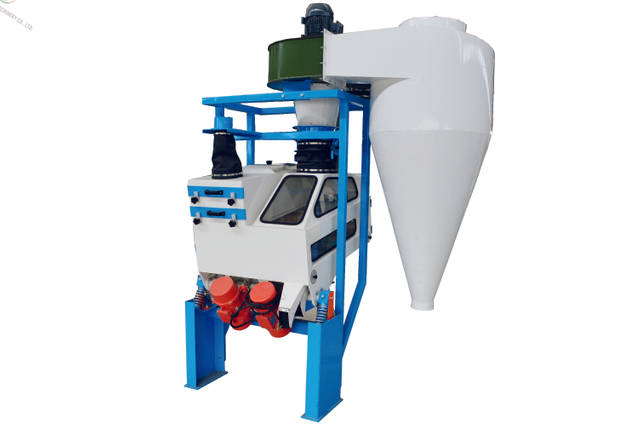
In the high-stakes world of agricultural processing, a single stone hidden within a batch of raw grain is not merely a contaminant; it is a financial liability. For plant managers and quality control directors, the operational reality is harsh: one overlooked pebble can shatter the ceramic rollers of a huller, damage delicate color sorter ejectors, or, in worst-case scenarios, reach the consumer and trigger a devastating product recall. While screens and sieves are effective for size grading, they fail when contaminants mimic the physical dimensions of the crop.
This is where the Seed Destoner becomes an indispensable asset. It serves not just as a cleaning tool, but as a critical "asset protection" layer in your production line. By leveraging the physics of density separation, these machines ensure that only safe, pure product moves downstream to your most expensive milling equipment. In this article, we will provide a deep dive into the engineering principles of density separation, analyze the return on investment based on equipment longevity, and offer a technical comparison between vacuum and pressure-based technologies to help you optimize your facility.
Key Takeaways
Asset Protection: Destoners prevent thousands of dollars in damage to downstream milling and sorting machinery.
The "Invisible" Threat: Modern destoners remove stones that are the exact same size as grains, which screens miss.
Efficiency Gains: Automating density separation reduces manual labor and stabilizes throughput for seed processing machine destoners.
Technology Choice: Vacuum systems offer dust control advantages over traditional pressure systems.
Beyond Quality Control: The Strategic Benefits of a Seed Destoner
When evaluating capital expenditures, many executives view cleaning equipment solely through the lens of product purity. However, the strategic value of a destoner lies equally in its ability to protect the rest of your processing line. The cost of a destoner is often a fraction of the cost required to repair high-speed milling machinery damaged by stone ingress.
Protection of Capital Equipment
Modern food processing lines rely on precision. Rice hullers using rubber rolls, hammer mills with fine sieves, and flour milling roller stands operate with tight tolerances. If a stone enters these zones, the damage is immediate. For example, in rice milling, a stone passing between rubber rolls creates a gouge that permanently reduces hulling efficiency, leading to increased broken grains. In flour milling, a stone can spark against steel rollers, creating a dust explosion hazard.
Data from maintenance logs often reveals a stark contrast: the annualized repair cost of high-speed milling equipment—including parts, labor, and downtime—frequently exceeds the operating cost of a dedicated destoning unit. By installing a robust seed processing machine destoner early in the cleaning section, you effectively place an insurance policy on every machine that follows.
Solving the "Same-Size" Problem
A common misconception is that a comprehensive screening system (sieves) is sufficient for cleaning. The engineering limitation of screens is that they separate materials based strictly on size (dimensions). However, nature is unpredictable. Stones, glass shards, and mudballs often erode until they mimic the exact length and width of wheat kernels, coffee beans, or soybeans.
When a stone is the same size as a seed, a screen cannot separate them. This is the "Same-Size" problem. A seed destoner machine solves this by ignoring size and focusing on density (specific gravity). Because stones are significantly denser than organic material, the destoner can isolate them even if they physically look identical to the premium product. This shift from "Size-Based Separation" to "Density-Based Separation" is the only way to achieve near-zero contamination rates.
Food Safety & Compliance
Beyond machinery protection, regulatory pressure is intensifying. Standards such as HACCP (Hazard Analysis Critical Control Point), ISO 22000, and BRCGS demand rigorous control over physical contaminants. A "light-weight pebble" or a hardened mudball poses a severe dental hazard to end-consumers. In an era of social media, one consumer breaking a tooth on a "stone-free" product can cause reputational damage that takes years to repair. Implementing high-precision destoning is a tangible demonstration of due diligence in your food safety plan.
The Science of Separation: How a Vibratory Seed Destoner Works
To operate a facility efficiently, operators must understand the physics occurring inside the machine. A vibratory seed destoner works on the principle of a fluidized bed, where air acts as a lubricating medium to separate materials of different weights.
The Fluidized Bed Principle
The separation process occurs on an inclined, vibrating deck covered with a woven wire mesh. Fans force air upward through the mesh, while the deck vibrates at a specific frequency. This combination creates a "fluidized bed." The airflow is calibrated to be strong enough to lift the lighter material (the grain) so that it floats just above the mesh surface. Meanwhile, the heavier material (stones) cannot be lifted by the air; they sink and make contact with the vibrating deck.
Once stratified, the mechanics take over. The vibration of the deck drives the heavy material (stones) uphill toward the stone discharge outlet. The lighter grain, floating on the cushion of air, flows downhill due to gravity toward the clean product outlet. This counter-flow movement is the hallmark of efficient density separation.
Terminal Velocity & Density Ratios
The success of this operation depends on the difference in specific gravity between the crop and the contaminant. The greater the difference, the easier the separation.
| Material | Approximate Density (g/cm³) | Separation Difficulty |
|---|
| Paddy Rice | ~0.55 - 0.65 (Bulk) / ~1.4 (Particle) | High (Easy to separate from stones) |
| Wheat | ~0.77 (Bulk) | Medium |
| Mudballs | ~1.8 - 2.0 | Challenging (Requires precise airflow) |
| Field Stones | ~2.5 - 2.8 | Easy Separation |
| Iron/Metal | ~7.8 | Very Easy (High Density) |
Technicians must understand "Terminal Velocity"—the air speed required to suspend a particle. The goal is to set the airflow at the terminal velocity of the seed. If the air is faster, it will blow the seeds out with the dust. If it is slower, the seeds will sink and be ejected with the stones.
The Separation Window
Operational efficiency lies in maintaining the "Separation Window." This is the narrow range of airflow and vibration settings where perfect stratification occurs. Factors like humidity (which affects grain weight) and a surge in feed rate can disrupt this window. Advanced grain seed destoner machines feature adjustable deck angles and variable frequency drives (VFDs) on fans, allowing operators to fine-tune the machine dynamically to keep the separation window stable.
Evaluating Destoner Technologies: Pressure, Vacuum, and Combined Systems
Not all destoners are built alike. The market is primarily divided between pressure-type (blowing) and vacuum-type (suction) systems, with hybrid magnetic options available for difficult applications.
Pressure-Type Destoners (Blowing)
Pressure destoners utilize a fan located below the deck to blow air upward through the screen. These machines are the traditional workhorses of the industry.
Pros: They are mechanically simpler, rugged, and typically have a lower initial capital cost. They are effective for heavy grains like corn or beans.
Cons: Because they blow air out, they can pressurize the machine housing. If seals are not perfect, dust escapes into the plant environment. They usually require a separate, external aspiration hood or dust collection system to maintain facility hygiene.
Vacuum-Type Destoners (Suction)
Vacuum destoners place the fan above the deck (or connect to a central aspiration system), pulling air up through the product. This creates negative pressure inside the machine.
Pros: This is the preferred technology for modern, sanitary plants. Because the machine is under negative pressure, no dust leaks out; instead, any leak pulls air in. This results in a "dust-free" operation. Furthermore, the suction actively removes light impurities (husks, chaff, dust) while destoning, serving a dual cleaning function. This makes them ideal for a high-end Seed Destoner for Food Processing line.
Cons: They generally consume slightly more energy relative to airflow and require precise maintenance of door seals to ensure consistent suction pressure.
Combined Seed Destoner & Magnetic Separation
Density separation has limits. Mudballs (clods of dirt) can sometimes have a density very similar to grain, and some ferrous metals might be trapped in the flow. To address this, a combined seed destoner often integrates a magnetic separation stage. Using high-strength rare earth magnets (often 8000+ Gauss), these systems pull out ferrous contaminants that density alone might miss. For comprehensive purification, combining density separation with magnetic cleaning is a game-changer, ensuring that neither stones nor screws reach the packaging line.
Calculating ROI and Operational Efficiency
Investing in destoning technology requires an analysis of Return on Investment (ROI) and Total Cost of Ownership (TCO). The financial case for these machines is strong when you consider throughput and energy consumption.
Throughput vs. Footprint
Space in a processing plant is premium real estate. Modern destoners are engineered to provide high capacity (metric tons per hour) with a relatively small physical footprint. By stacking decks or optimizing the aerodynamic design, manufacturers can achieve high throughput rates without expanding the building. For example, a high-capacity unit processing 10 tons of wheat per hour might occupy the same floor space as an older 5-ton unit, effectively doubling the revenue potential per square meter.
Energy Efficiency & Sustainability
Sustainability is becoming a key operational metric. We are seeing a shift toward low-energy motors and balanced vibratory decks. A well-balanced deck requires less horsepower to vibrate because the energy is not wasted fighting the machine’s own weight. Furthermore, precise airflow management means fans do not need to run at full speed constantly. VFDs allow fans to run at the exact speed needed for the specific crop weight, reducing power consumption per ton of processed product.
Total Cost of Ownership (TCO)
The purchase price is only the beginning. Smart buyers evaluate the TCO, which includes maintenance and downtime.
Maintenance Factors: Routine tasks include cleaning the deck mesh to prevent blinding (blockage), replacing air filters, and lubricating eccentric bearings. Machines designed with "tool-free" access doors reduce the labor hours required for these tasks.
The "Hidden" Savings: The true ROI comes from the prevention of downtime. If a stone blocks a chute or jams a rotary valve downstream, the line stops. If your facility produces $5,000 worth of product per hour, a two-hour stoppage costs $10,000. A destoner that prevents just one of these events per year pays for itself rapidly.
How to Select the Right Seed Destoner Manufacturer
Choosing the right partner is as important as choosing the right technology. When vetting a Seed Destoner manufacturer, focus on versatility, build quality, and after-sales support.
Material Versatility (Multi-Grain Capability)
Few plants process a single crop year-round. You need a machine that can switch from processing sesame seeds to soybeans with minimal downtime. Look for equipment that offers quick, tool-less adjustments for deck angle and air volume. The ability to handle a wide range of bulk densities makes your facility more agile and able to capitalize on changing market demands.
Construction Quality
Destoners are subjected to constant, high-frequency vibration. If the frame is weak, it will crack over time. Evaluate the construction materials—heavy-gauge mild steel or stainless steel frames are preferred. The deck material is also critical; woven wire mesh provides excellent air distribution but must be durable enough to withstand the abrasive action of sliding stones.
Vendor Support & Calibration
A destoner is only effective if it is calibrated correctly. The manufacturer must provide expert commissioning and training. Your operators need to know how to find that "Separation Window." Additionally, ensure the manufacturer has a reliable supply chain for spare parts. Waiting six weeks for a replacement belt or screen is unacceptable in a high-volume production environment.
Conclusion
The inclusion of a seed destoner in your processing line is a strategic decision that transcends simple cleaning. It is an investment in production line security, machinery longevity, and brand reputation. While screens handle size, only a destoner can effectively manage density, removing the invisible threats that jeopardize your equipment and your customers.
For modern facilities, the gold standard for zero-defect production is the synergy of density separation followed by optical sorting. By removing the heavy stones first, you allow your optical sorters to focus on color defects, maximizing the efficiency of both systems. We encourage you to audit your current waste streams today. If you find good grain in your waste, or stones in your product, your current setup is costing you money. It is time to upgrade to a precision density separation solution.
FAQ
Q: What is the difference between a Gravity Separator and a Seed Destoner?
A: A gravity separator grades seeds by density (grading light vs. heavy seeds), while a destoner specifically removes heavy contaminants (stones/glass) that are significantly heavier than the good product.
Q: Can a seed destoner remove mudballs?
A: Standard destoners struggle with mudballs if they have the same density as the grain. A combined seed destoner or friction-based cleaning stage is often required for mudballs.
Q: How often does a vibratory seed destoner need calibration?
A: It should be calibrated whenever the raw material changes (e.g., different moisture content or crop variety) or during routine maintenance checks for airflow consistency.
Q: Does the machine require a dust collection system?
A: Pressure-type machines require external hoods/cyclones. Vacuum-type machines have internal suction that naturally aids in dust control.